
 By gail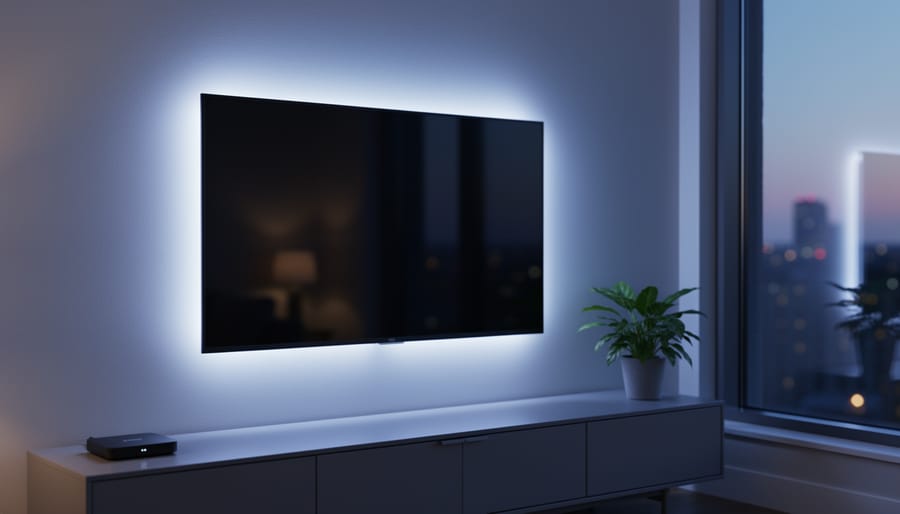
LED light strips transform your TV viewing experience while delivering measurable energy efficiency—a principle that applies equally to residential entertainment spaces and commercial digital signage installations. Modern LED bias lighting reduces eye strain by up to 40% during extended viewing sessions, creating ambient illumination that enhances perceived contrast and color accuracy without the energy consumption of traditional backlighting solutions.
Select strips with appropriate luminosity between 300-500 lumens per meter for optimal results. Installation requires measuring your TV perimeter, ensuring adequate USB or outlet power access, and securing strips along the rear edges using pre-applied adhesive backing. Smart-enabled options integrate with existing automation systems, offering programmable color temperatures that adapt to content and time of day—functionality increasingly valuable for businesses utilizing video walls in customer-facing environments.
The same LED technology powering entertainment applications drives innovation across commercial and industrial sectors. Understanding these fundamentals positions decision-makers to recognize broader opportunities where efficient, customizable lighting delivers both operational benefits and sustainability outcomes. Whether enhancing a conference room presentation setup or exploring comprehensive facility upgrades, the core principles of LED efficiency remain consistent and financially advantageous.
Why LED Light Strips Behind Your TV Make Sense
Installing LED light strips behind your television delivers measurable benefits that extend beyond simple decoration. The practice, known as bias lighting, addresses fundamental viewing comfort issues while offering practical advantages for both home and commercial environments.
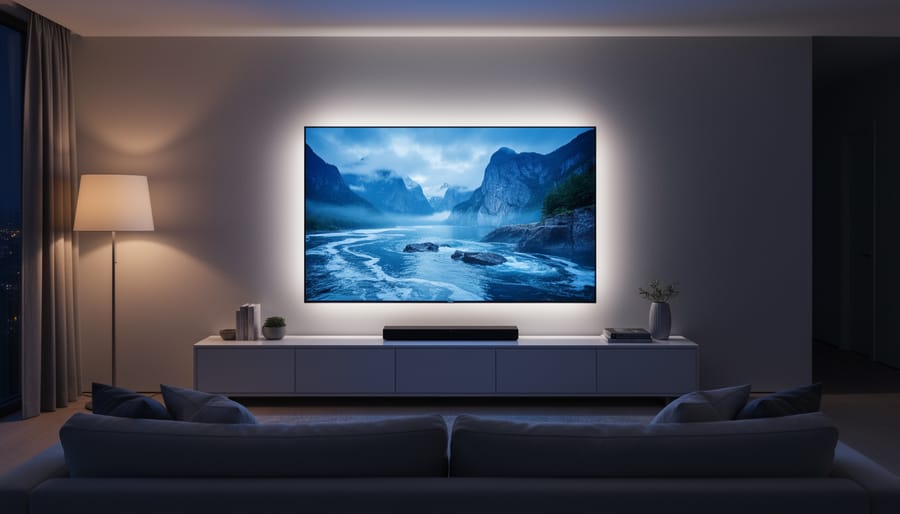
Reduced eye strain represents the primary health benefit of bias lighting. When watching television in a dark room, your eyes constantly adjust between the bright screen and surrounding darkness, causing fatigue and discomfort during extended viewing sessions. LED strips create a soft ambient glow that reduces this contrast differential, minimizing strain on the visual system. This principle applies equally whether you’re setting up a home theater or designing a commercial waiting area where screens play continuously.
The enhanced perceived contrast and color accuracy may seem counterintuitive—adding light behind your screen actually improves picture quality. By providing a neutral reference point for your eyes, bias lighting helps the brain process on-screen colors more accurately. Blacks appear deeper, colors seem more vibrant, and overall image quality improves without any changes to your television settings. This effect proves particularly valuable in commercial applications like showrooms or presentation spaces where accurate color representation matters.
LED light strips function as effective ambient room lighting, eliminating the need for harsh overhead lights or table lamps during evening viewing. This dual-purpose functionality reduces overall energy consumption, especially when you consider that modern energy-efficient lighting solutions consume a fraction of the power required by traditional incandescent or halogen alternatives. Most LED strips draw between 5-15 watts compared to 60-100 watts for conventional bulbs.
The longevity factor deserves consideration as well. Quality LED strips typically operate for 30,000-50,000 hours, translating to years of maintenance-free service. For facilities managers overseeing multiple installations, this durability significantly reduces replacement costs and labor expenses. The innovation in LED technology continues advancing efficiency standards while maintaining competitive pricing, making the initial investment increasingly justifiable from both comfort and operational perspectives.
Understanding LED Strip Technology for TV Applications
Power Considerations: AC vs. Low-Voltage DC
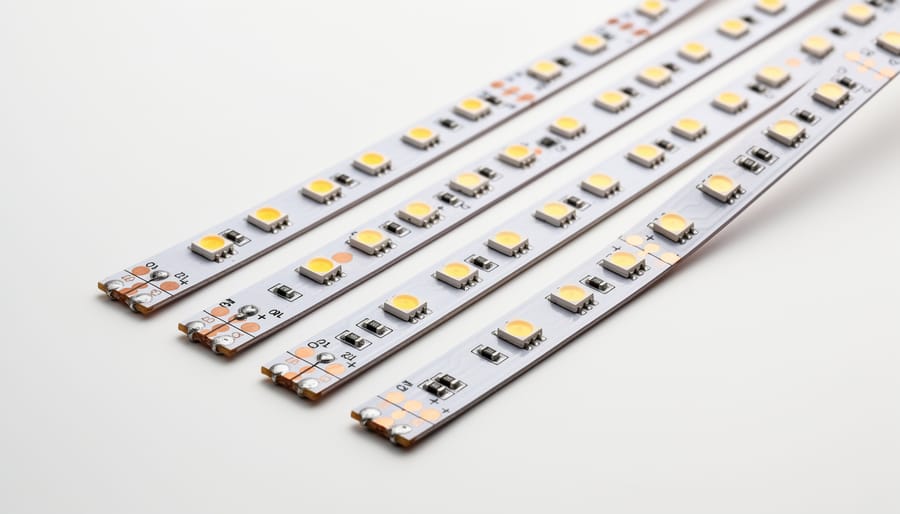
Understanding the power requirements for LED light strips behind your TV is essential for both safety and long-term performance. Most quality LED strips designed for home entertainment applications operate on low-voltage DC power, typically 12V or 24V, which offers significant advantages over traditional AC-powered lighting solutions.
Low-voltage DC LED strips provide inherent safety benefits, particularly important when installing lighting in proximity to electronic equipment like televisions and media consoles. The reduced voltage minimizes electrical hazards, making installation more straightforward for both professional installers and DIY enthusiasts. These systems typically include a power adapter that converts standard household AC power to the appropriate DC voltage, creating a safe interface between your wall outlet and the LED strip.
From an efficiency standpoint, DC-powered LED strips excel by eliminating the constant AC-to-DC conversion that occurs in many traditional lighting systems. This direct power delivery translates to reduced energy waste and lower operating costs over the strip’s lifetime, a consideration that scales significantly when applied to commercial installations or multiple units.
For sustainability-focused applications or off-grid scenarios, solar-powered LED strip solutions present an innovative alternative. While less common for residential TV backlighting, these systems demonstrate the versatility of DC-powered LED technology and align with broader energy independence goals. Solar options are particularly relevant for businesses exploring comprehensive sustainable lighting strategies across multiple facility types.
When selecting your LED strip system, verify that the included power supply matches both the voltage requirements and total wattage of your strip length to ensure optimal performance and longevity.
Choosing the Right LED Strips for Your TV Setup
Selecting the right LED strips for your television setup requires evaluating several technical and environmental factors to achieve optimal performance while maintaining energy efficiency. The decision-making process begins with accurate measurement and understanding your specific requirements.
Start by measuring your TV’s perimeter to determine the appropriate strip length. For most installations, you’ll need strips that cover the top and both sides of your television, though some prefer adding a bottom strip for complete ambient coverage. Add approximately 10-15 percent extra length to your measurements to account for corners and mounting flexibility. Most LED strips come in standard lengths of 6.5, 9.8, or 16.4 feet, with some manufacturers offering customizable options for specific commercial applications.
| TV Size Range | Recommended Strip Length | Suggested Brightness | Color Temperature |
|---|---|---|---|
| 32-43 inches | 6.5-9.8 feet | 200-400 lumens | 3000-4000K |
| 50-60 inches | 9.8-13 feet | 400-600 lumens | 3500-5000K |
| 65-75 inches | 13-16.4 feet | 600-900 lumens | 4000-5500K |
Brightness requirements depend heavily on your room’s ambient lighting conditions. Darker viewing environments benefit from lower-intensity strips (200-400 lumens total output), while rooms with significant natural light or multiple light sources require brighter options (600-900 lumens). The goal is reducing eye strain without creating distracting glare or washing out screen contrast. Consider dimmable options that allow adjustment based on time of day and content type.
Color options range from single-color white strips to full RGB or RGBW configurations. White strips with adjustable color temperature (2700K-6500K) provide clean, professional backlighting suitable for any content. RGB strips enable creative customization and can sync with on-screen colors for immersive experiences, though this feature may prove more novelty than necessity for focused viewing. RGBW strips combine both capabilities, offering versatility for various applications.
Control features significantly impact user experience and energy management. Basic manual controls work for simple installations, while remote-controlled strips provide convenient adjustment from your viewing position. Smart home integration through Wi-Fi or Bluetooth connectivity enables scheduling, automation, and voice control, contributing to sustainable energy practices by ensuring lights operate only when needed. For commercial installations or facilities requiring multiple synchronized displays, consider strips compatible with centralized control systems.
Budget considerations should account for both initial investment and long-term operational costs. Quality LED strips typically consume 4-10 watts per meter, translating to minimal electricity costs even with extended use. Higher-priced options often include superior adhesive backing, better heat dissipation, and longer warranties, factors particularly important for commercial environments where replacement costs and downtime matter significantly.
Installation Best Practices
Proper installation of LED light strips behind televisions ensures optimal performance, safety, and visual impact in commercial environments. Follow these best practices to achieve professional results in lobbies, waiting areas, and office spaces.
Begin with thorough surface preparation. Clean the mounting area behind your television using isopropyl alcohol to remove dust, oils, and residue that could compromise adhesive bonding. Allow surfaces to dry completely before applying strips. For textured walls or commercial-grade paint finishes, consider using supplementary mounting clips designed for LED strips to enhance stability.
Optimal placement positioning significantly affects the ambient lighting effect. Mount strips 2-4 inches from the wall edge to create uniform backlighting without visible hotspots. Route the strips along the television’s perimeter, maintaining consistent distance from edges. For larger commercial displays exceeding 55 inches, consider dual-strip configurations on vertical sides for enhanced uniformity. Ensure strips don’t interfere with ventilation ports or connection panels on the television unit.
Cable management contributes to both aesthetics and safety in professional settings. Use adhesive cable clips or channels to secure power cables and connectors along furniture backs or wall edges. In commercial installations, routing cables through existing wire management systems maintains clean sightlines and meets facility standards. Avoid running cables across walkways or high-traffic areas where they pose tripping hazards.
Power connection safety remains paramount, particularly in commercial applications. Verify that LED strip voltage requirements match your power adapter specifications. Connect strips only to UL-listed adapters and surge protectors. For installations requiring multiple strips or extended runs, calculate total wattage to prevent circuit overload. Position power adapters in accessible locations for maintenance while keeping them away from heat sources or moisture-prone areas.
Commercial installations benefit from sustainable practices. LED technology’s energy efficiency reduces operational costs while the straightforward installation process minimizes labor expenses. These factors make LED backlighting an economical choice for facilities managers seeking innovative lighting solutions that enhance spaces without extensive infrastructure modifications or ongoing maintenance demands.
Energy Efficiency and Cost Savings
LED light strips represent a significant advancement in energy-efficient ambient lighting, particularly when compared to traditional alternatives. A typical LED strip behind a TV consumes approximately 7-15 watts for a standard 65-inch display setup, while achieving comparable illumination with incandescent bulbs would require 40-60 watts, and even compact fluorescent options draw 15-23 watts. This translates to energy consumption reductions of 60-80% in most applications.
The financial advantages extend well beyond immediate operational savings. With typical lifespans ranging from 25,000 to 50,000 hours, LED strips drastically reduce replacement frequency and associated labor costs. For businesses running display areas or hospitality venues with extended operating hours, a quality LED strip operating 8 hours daily can last 8-17 years before requiring replacement, compared to frequent bulb changes with traditional lighting.
Return on investment calculations reveal compelling economics for commercial applications. While the initial purchase price of LED strips may exceed basic alternatives, the payback period typically ranges from 6-18 months depending on usage patterns and electricity rates. For facilities managers seeking to reduce energy costs across multiple locations, the cumulative savings become substantial. A retail chain implementing LED ambient lighting across 50 locations could realize annual savings exceeding $4,000 in energy costs alone, while simultaneously reducing maintenance expenses.
Beyond direct financial benefits, LED technology aligns with corporate sustainability initiatives. Lower energy consumption translates to reduced carbon footprints, supporting environmental goals without compromising lighting quality or aesthetic appeal. For organizations committed to measurable sustainability outcomes, LED strip adoption provides quantifiable improvements in energy efficiency metrics that contribute to broader environmental stewardship objectives.
Commercial Applications Beyond Home Entertainment
The proven benefits of LED strip lighting behind televisions extend far beyond residential applications, offering compelling advantages for commercial environments where visual presentation and professional appearance directly impact business outcomes.
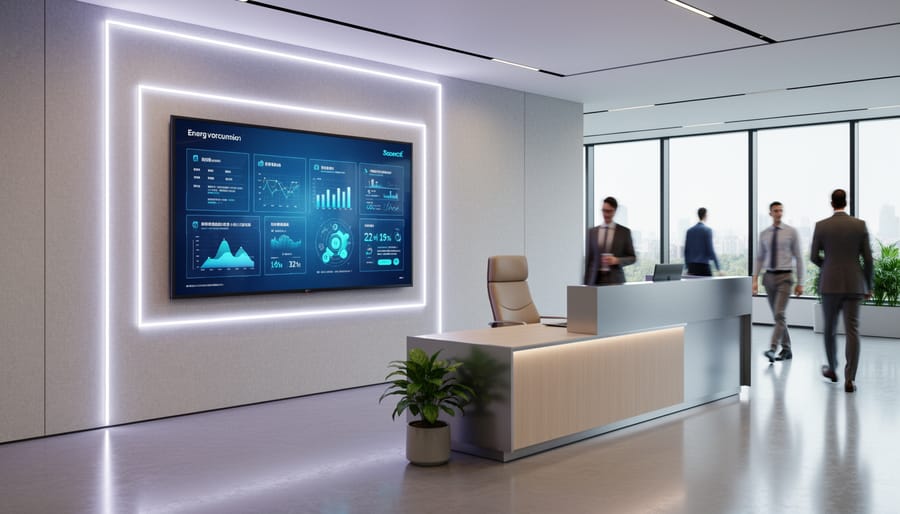
Digital signage installations in corporate lobbies, retail storefronts, and transportation hubs gain enhanced visibility and visual impact through strategic LED backlighting. The same bias lighting principles that reduce eye strain for home viewers create more comfortable viewing conditions for customers and employees who regularly interact with display screens throughout their workday. This improved ergonomic design can contribute to increased engagement with informational content and reduced viewer fatigue.
Reception areas and conference rooms benefit substantially from professionally backlit display screens. Customizable RGB capabilities enable businesses to align screen presentation with brand identity through precise color matching, creating cohesive visual experiences that reinforce brand recognition. During presentations, properly configured backlighting reduces perceived screen glare and enhances contrast visibility for attendees seated at various angles, improving information retention and meeting effectiveness.
Retail environments utilize backlit displays to draw attention to promotional content and featured products. The enhanced contrast and depth perception created by LED strips make merchandise and messaging more visually appealing, potentially increasing conversion rates and customer dwell time. Unlike traditional lighting solutions, LED strips generate minimal heat, protecting sensitive electronics and temperature-sensitive products displayed nearby.
From a facilities management perspective, LED strip implementation significantly reduces commercial lighting costs through exceptional energy efficiency and extended operational lifespans exceeding 50,000 hours. This longevity translates to reduced maintenance interventions, lower replacement costs, and decreased labor expenses for facility teams. The sustainability profile of LED technology aligns with corporate environmental objectives while delivering measurable operational savings, making commercial adoption both economically prudent and environmentally responsible.
LED light strips for behind TV installations deliver measurable benefits that extend beyond aesthetic appeal. These solutions combine visual enhancement with practical advantages including reduced eye strain, improved contrast perception, and significant energy efficiency compared to traditional ambient lighting options. For residential users, the immediate improvement in viewing comfort translates into long-term cost savings through reduced electricity consumption and extended product lifespans that minimize replacement expenses.
Decision-makers in commercial environments—from hospitality venues to corporate waiting areas—can leverage these same principles at scale. Implementing LED backlighting as part of a broader sustainable lighting strategy demonstrates commitment to operational efficiency while creating engaging visual experiences for customers and employees.
Whether upgrading home entertainment spaces or outfitting commercial installations, LED strips represent a forward-thinking investment in energy-conscious infrastructure. Solar Light Independence brings specialized expertise in LED solutions for those requiring professional implementation support, ensuring optimal performance and integration across residential and commercial applications. The intersection of innovation, sustainability, and practical functionality makes LED TV backlighting a compelling choice for modern lighting design.