
 By gail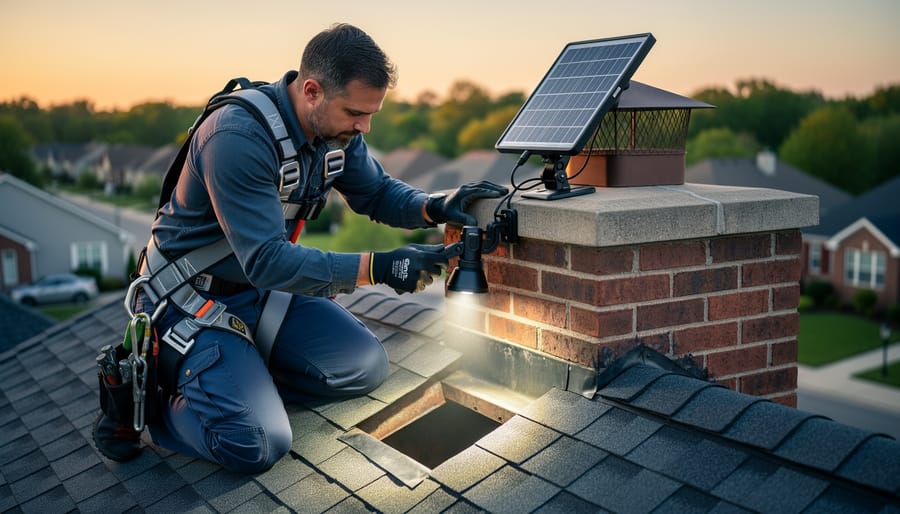
Chimney maintenance professionals face a persistent challenge: accessing adequate lighting in confined, elevated spaces where traditional power sources prove impractical or hazardous. Off-grid solar LED lighting systems solve this operational bottleneck by delivering reliable, portable illumination without extension cords, generators, or building electrical access—critical advantages when servicing structures like those maintained by masonchimneyrepair.com and similar professional operations.
Solar-powered LED solutions transform chimney inspection and repair efficiency. These systems eliminate trip hazards from cables snaking across rooftops, reduce setup time by 40-60% compared to generator-dependent alternatives, and provide consistent brightness in the 800-1500 lumen range necessary for identifying structural defects, creosote buildup, and masonry deterioration. The technology addresses specific pain points: battery capacities now support 6-10 hour work sessions, weatherproof housings withstand rooftop conditions, and magnetic or clamp mounting options adapt to varied chimney architectures.
Beyond operational convenience, solar lighting delivers measurable cost advantages for service businesses. Zero fuel expenses, minimal maintenance requirements, and elimination of generator rental fees create 3-5 year ROI scenarios even for small chimney service operations. Environmental benefits align with growing client preferences for sustainable contractor practices, while OSHA-compliant cordless operation reduces worksite safety concerns. This convergence of performance, economics, and regulatory alignment makes solar LED technology increasingly essential infrastructure for forward-thinking chimney maintenance enterprises.
The Visibility Problem in Chimney Inspection and Maintenance
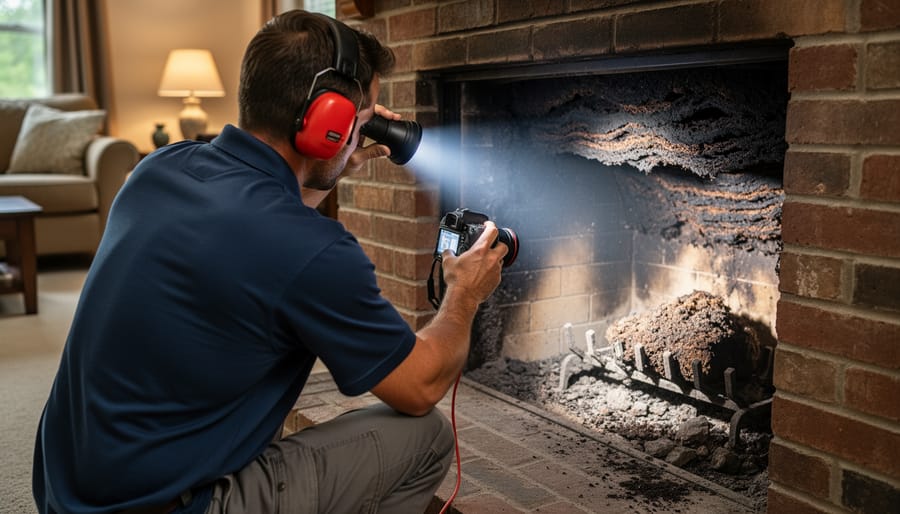
Chimney inspection and maintenance present unique visibility challenges that directly impact both safety and operational efficiency. Unlike open work environments, chimney structures are inherently dark, vertical spaces where natural light rarely penetrates beyond the opening. This confined architecture creates hazardous conditions for inspectors who must identify critical safety issues while navigating narrow flues and complex masonry structures.
The consequences of inadequate lighting during chimney inspections are significant. Creosote buildup in chimneys remains one of the leading causes of residential and commercial fires, yet this dark, tar-like substance is nearly impossible to detect accurately without proper illumination. Similarly, structural deterioration such as cracked flue liners, loose mortar joints, and water damage often goes unnoticed in poorly lit conditions, compromising the entire heating system’s integrity.
Inadequate lighting during chimney maintenance can result in missed detection of:
- Advanced creosote accumulation in hard-to-reach areas
- Cracks or deterioration in clay or metal flue liners
- Animal nests, debris, or vegetation blocking proper ventilation
- Water intrusion damage affecting structural stability
- Mortar degradation between bricks or stones
Traditional lighting solutions introduce their own complications. Extension cords create tripping hazards in already precarious working conditions, while battery-powered options frequently lose charge mid-inspection, forcing costly interruptions. For facilities managers overseeing multiple properties or chimney service professionals conducting sequential inspections, these limitations translate to reduced productivity and increased liability exposure.
The solution requires lighting technology that combines portability, reliability, and sufficient illumination intensity to reveal fine details in confined spaces. This is where innovative, sustainable lighting approaches offer compelling advantages for commercial operations focused on both safety compliance and operational efficiency.
Why Traditional Power Solutions Fall Short
Chimney maintenance professionals face significant obstacles when relying on conventional power sources for adequate lighting. Generators, while portable, create substantial noise pollution that disrupts residential neighborhoods and commercial environments. This becomes particularly problematic during early morning or late evening inspections when sound restrictions apply. Additionally, generators require fuel management, regular maintenance, and produce emissions that contradict sustainability initiatives many facilities now prioritize.
Extension cords present serious safety concerns on rooftops and elevated work platforms. These cables create tripping hazards for technicians navigating already challenging terrain, particularly on sloped or multi-level commercial properties. The inherent risks of electrical hazards on rooftops multiply when moisture, weather exposure, or damaged insulation compromise cord integrity. Managing hundreds of feet of cabling across multiple stories also consumes valuable time and increases project costs.
Power outlet accessibility represents another critical limitation. Many commercial buildings lack convenient exterior electrical access points near chimney structures, forcing technicians to route connections through interior spaces or rely on inadequate lighting positions. Historic properties and older facilities compound these challenges with outdated electrical infrastructure unable to safely support high-wattage work lights.
For multi-story properties, these limitations intensify exponentially. Coordinating power delivery to rooftop locations requires additional personnel, equipment, and time investments that directly impact operational efficiency and profitability. These practical constraints highlight the need for innovative lighting solutions designed specifically for elevated maintenance environments.
Off-Grid Solar LED Lighting: The Professional’s Advantage
Power Independence on Every Job Site
Chimney maintenance demands flexibility, particularly when servicing properties where electrical infrastructure is limited, outdated, or inaccessible. Traditional lighting solutions tether technicians to power outlets, creating logistical challenges that slow productivity and limit service capabilities. Off-grid solar LED systems transform this equation entirely by storing energy during daylight hours and delivering reliable illumination whenever and wherever technicians need it.
This independence proves invaluable across diverse work environments. Whether inspecting a historic downtown building with aging electrical systems, servicing rural properties miles from reliable power sources, or working on rooftops where extension cords pose safety hazards, solar-charged lighting adapts seamlessly. Technicians arrive equipped with fully charged units ready for immediate deployment, eliminating time spent locating outlets, running cables, or coordinating with property managers for electrical access.
The operational efficiency gains extend beyond convenience. Solar lighting enables same-day service across multiple locations without power-related delays, improving scheduling flexibility and customer satisfaction. For business owners managing service teams, this energy independence translates directly to increased billable hours and reduced equipment-related downtime, making it a strategically sound investment in operational capacity.
LED Technology Meets Chimney Work Demands
LED technology represents a significant advancement for chimney maintenance applications, offering performance characteristics that directly address the unique challenges of this demanding work environment. Unlike traditional lighting solutions, modern LED systems deliver high-quality bright white light that enables technicians to accurately identify structural defects, creosote buildup, and deterioration during inspections—critical factors for safety and compliance.
The durability of LED components proves essential in chimney environments where exposure to soot, moisture, and temperature variations can compromise conventional lighting. LED fixtures withstand these harsh conditions while maintaining consistent light output, reducing the frequency of replacements and associated downtime.
One of the most important safety features is minimal heat generation. Understanding how solar-powered LED lights work reveals why these systems remain cool during operation, eliminating fire hazards in environments where flammable creosote deposits may be present—a distinct advantage over heat-producing alternatives.
Energy efficiency extends beyond environmental benefits to practical operational advantages. LED technology requires significantly less power to produce equivalent or superior illumination, meaning solar-charged battery systems provide extended runtime throughout demanding workdays. This efficiency translates to reliable lighting performance without the need for frequent recharging, enabling maintenance teams to complete inspections without interruption while reducing long-term operational costs.
Key Features to Consider for Chimney Maintenance Applications
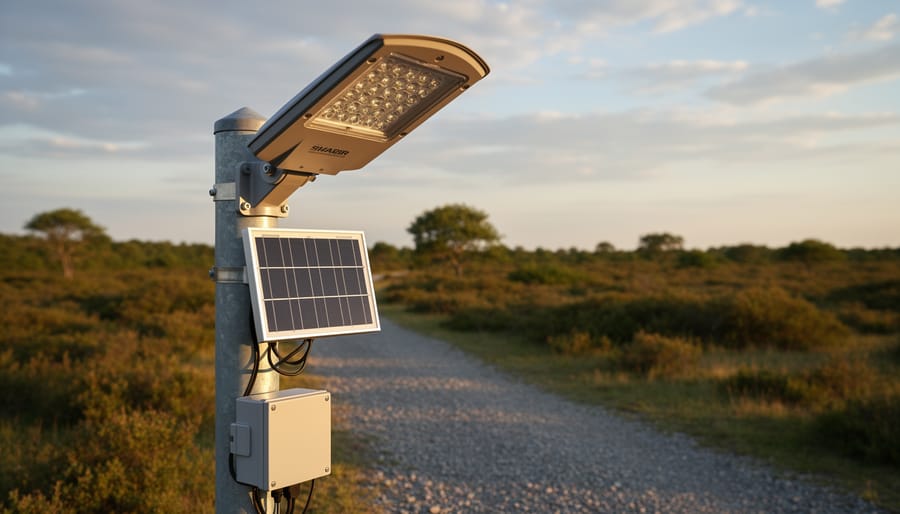
When selecting solar LED lighting systems for chimney maintenance applications, understanding the specific technical requirements of this challenging environment is essential for ensuring safety, efficiency, and long-term reliability. The unique conditions encountered during chimney inspection and cleaning demand lighting solutions engineered to perform under demanding circumstances.
Brightness output stands as a critical consideration, with chimney interiors requiring substantial illumination to reveal structural defects, creosote buildup, and deterioration that might otherwise remain invisible. Professional-grade systems should deliver a minimum of 1000 lumens, though 1500-2000 lumens provides optimal visibility in deep or heavily soiled flues. Adjustable brightness settings offer additional versatility, allowing technicians to conserve battery power during preliminary assessments while maximizing output for detailed inspections.
| Feature Requirement | Importance for Chimney Work | Recommended Specification |
|---|---|---|
| Lumen Output | Reveals defects in dark, sooty environments | 1500-2000 lumens minimum |
| Weather Resistance | Protection from rain, snow, and temperature extremes | IP65 or higher rating |
| Mounting Flexibility | Secure positioning at various heights and angles | Magnetic, clamp, and tripod options |
| Battery Capacity | Extended operation during lengthy inspections | 8-12 hour runtime |
Weather resistance cannot be overlooked, as chimney maintenance frequently occurs outdoors where equipment faces exposure to precipitation, wind, and temperature fluctuations. Systems certified with an IP65 rating or higher provide adequate protection against dust infiltration and water ingress, ensuring consistent performance regardless of seasonal conditions. This durability proves particularly valuable for facilities managers overseeing year-round maintenance schedules.
Mounting versatility directly impacts operational efficiency and worker safety. Quality solar LED systems offer multiple attachment methods including magnetic bases for metal flashing, adjustable clamps for ladder rungs, and stable tripod configurations for ground-level positioning. This adaptability eliminates the need for technicians to hold lights manually, freeing both hands for tools and inspection equipment while reducing fatigue during extended sessions.
Battery capacity and solar panel efficiency determine operational autonomy, a crucial factor when working at remote locations or properties without convenient electrical access. Modern lithium-ion batteries paired with high-efficiency photovoltaic panels enable rapid charging even in partial sunlight conditions, delivering 8-12 hours of continuous illumination. This combination of sustainable power generation and extended runtime represents the innovation driving adoption across commercial and industrial maintenance operations seeking cost-effective alternatives to generator-dependent lighting systems.
Real-World Applications for Chimney Service Professionals
Off-grid solar LED lighting transforms chimney maintenance workflows across multiple service scenarios, delivering tangible improvements in both efficiency and service quality. For residential fireplace inspections, technicians equipped with portable solar lighting systems can conduct thorough examinations without relying on homeowner electrical outlets or running extension cords through living spaces. This independence allows chimney sweeps to position lighting precisely where needed, illuminating hard-to-reach sections of flue linings and identifying creosote buildup, structural damage, or blockages with greater accuracy.
Commercial building maintenance contracts present even more compelling applications. Multi-unit residential properties and office buildings with multiple chimneys benefit significantly when service providers utilize commercial solar LED lighting systems. These installations eliminate the logistical challenges of accessing building power sources, particularly valuable when working on rooftops or in mechanical rooms where electrical infrastructure may be limited or require special authorization.
Historic building restoration projects showcase another practical advantage. When inspecting century-old chimneys in heritage properties, avoiding electrical connections protects architectural integrity while providing superior illumination for documenting conditions and planning restoration work. The portability of solar-powered units enables technicians to move seamlessly between multiple chimneys during a single site visit, reducing setup time and increasing billable inspection hours.
Emergency inspection scenarios further demonstrate value. Following storms or suspected chimney fires, solar lighting systems enable immediate assessment without waiting for building power restoration. This rapid response capability strengthens service provider reputations and helps property managers make informed decisions about occupancy safety. The innovation inherent in solar-powered inspection equipment positions forward-thinking chimney service professionals as industry leaders committed to both operational excellence and sustainable business practices.
Cost Analysis: Investment vs. Long-Term Value
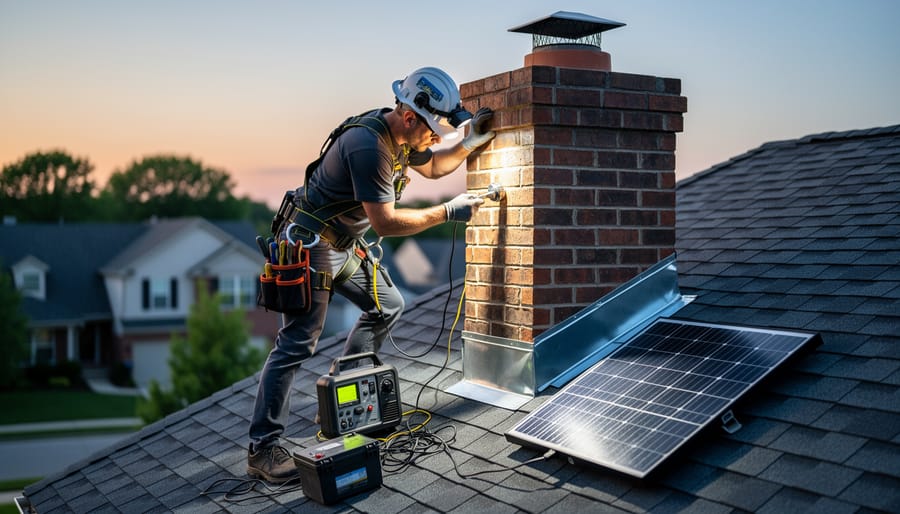
While off-grid solar LED lighting systems require a higher upfront investment compared to traditional portable lights, the financial analysis reveals compelling long-term value for chimney maintenance operations. Initial costs typically range from $300 to $800 per unit, depending on lumens output and battery capacity. However, this one-time expenditure eliminates ongoing expenses for fuel, batteries, and generator maintenance that can accumulate to $150-$400 annually per lighting setup.
The operational savings extend beyond direct energy costs. Solar LED systems reduce job completion time by 15-25% through superior illumination quality and positioning flexibility, allowing technicians to handle more appointments daily. This efficiency gain translates directly to increased revenue potential without proportional labor cost increases. For facilities managers, reduced inspection time minimizes operational disruption and contractor fees.
Perhaps most significantly, these advanced lighting solutions enable chimney service businesses to differentiate their offerings and command premium pricing. Professional-grade equipment demonstrates commitment to both quality workmanship and sustainability, increasingly important factors for commercial clients evaluating service providers. Companies report 10-20% higher service rates when highlighting innovative, eco-friendly inspection technologies.
The durability factor further strengthens the investment case. Quality solar LED units withstand harsh chimney environments for 5-7 years with minimal maintenance, while traditional alternatives require frequent replacement. When calculating total cost of ownership across this lifespan, solar solutions typically deliver 40-60% savings while simultaneously enhancing service capabilities and supporting environmental responsibility goals that resonate with today’s sustainability-conscious decision-makers.
Sustainability Benefits Beyond Cost Savings
Off-grid solar LED lighting represents more than just an operational upgrade—it’s a strategic investment in environmental stewardship that resonates throughout your entire organization. By eliminating dependence on fossil fuel-powered generators or grid electricity for chimney maintenance operations, facilities demonstrate measurable commitment to reducing carbon footprint while maintaining the highest safety and performance standards.
This approach particularly benefits organizations pursuing LEED certification, ESG reporting requirements, or sustainability benchmarks that increasingly influence client decisions and contract awards. Property managers can confidently showcase reduced emissions from maintenance activities, while chimney service professionals distinguish themselves in competitive markets by offering genuinely sustainable solutions rather than simply claiming environmental awareness.
The professional credibility gained extends beyond environmental benefits. Solar-powered equipment demonstrates innovation and forward-thinking operations management, qualities that environmentally conscious clients actively seek when selecting service providers. For commercial facilities, integrating solar LED technology into routine maintenance protocols creates documented sustainability metrics that support broader corporate environmental initiatives, transforming standard operational procedures into meaningful environmental action.
Off-grid solar LED lighting represents a practical innovation that directly addresses the persistent challenges chimney maintenance professionals face in delivering thorough, safe inspections. The connection between proper illumination and inspection quality cannot be overstated—inadequate lighting doesn’t just slow down work; it fundamentally compromises the ability to identify structural damage, creosote buildup, and blockages that threaten home heating system safety and efficiency.
For decision-makers evaluating operational improvements, solar-powered lighting solutions eliminate the logistical burdens and safety risks associated with traditional power sources while delivering consistent, high-quality illumination exactly where needed. The technology has matured beyond experimental stages, offering reliable performance that withstands the demanding conditions inherent to chimney work.
As facilities managers and business owners assess their maintenance operations, the question becomes not whether solar LED lighting can enhance chimney inspections, but how quickly implementation can begin improving service quality and operational efficiency. This sustainable approach aligns business objectives with environmental responsibility while solving real technical problems. Evaluating solar lighting solutions for your chimney maintenance operations means investing in safer work environments, more accurate inspections, and ultimately, better-protected properties and heating systems.