
 By gail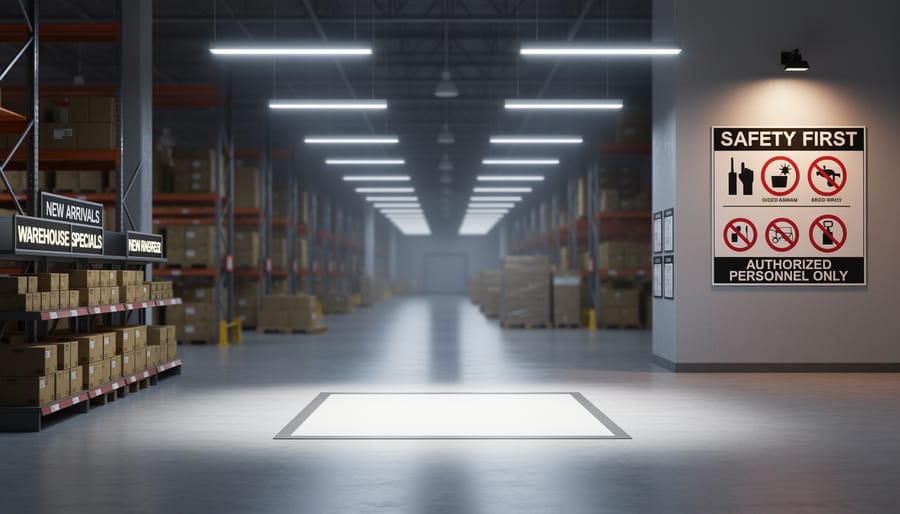
Light layering is a lighting design strategy that combines three distinct types of illumination, ambient, task, and accent, within a single space to create functional, flexible, and visually balanced environments.
For commercial and industrial facilities, this approach transforms how spaces perform. A warehouse equipped only with overhead high-bay fixtures may meet minimum visibility standards, but workers still strain under harsh shadows at inspection stations. A retail showroom flooded with uniform brightness might satisfy code requirements yet fail to draw customers toward featured products. Light layering solves these problems by assigning each lighting type a specific role, then orchestrating them to support both operational needs and human comfort.
The concept has gained traction among facilities managers and business owners for good reason. Properly layered lighting reduces energy waste by directing bright task light only where precision work happens, while softer ambient light fills general areas. Accent lighting highlights merchandise, safety signage, or architectural features without over-illuminating entire zones. The result is lower operating costs, improved worker productivity, and better customer experiences.
In 2026, solar-powered LED systems have made light layering more accessible for off-grid and grid-tied commercial applications alike. Businesses can now deploy independent lighting circuits powered by dedicated photovoltaic arrays, allowing each layer to operate autonomously or integrate with building management systems. This modular approach supports phased installations and future expansion without costly rewiring.
This article breaks down how light layering works, examines each component type, and explores practical applications for commercial decision-makers evaluating sustainable lighting upgrades.
What Is Light Layering?
Light layering is a deliberate lighting design approach that combines multiple light sources at varying heights, intensities, and beam angles to create flexible, functional, and visually comfortable spaces. Rather than depending on a single overhead fixture to illuminate an entire room, this method distributes illumination through complementary layers that work together to eliminate harsh shadows, reduce glare, and provide control over how a space looks and performs throughout the day.
The fundamental principle behind light layering is redundancy with purpose. Each layer serves a specific function while contributing to the overall lighting ecosystem. A well-layered lighting plan allows users to adjust illumination levels based on activity, time of day, or desired atmosphere by switching individual layers on or off. This flexibility proves particularly valuable in commercial environments where spaces serve multiple functions or where energy management directly impacts operating costs.
- Light Layers
- The distinct categories of illumination, ambient, task, and accent, that combine to form a complete lighting design. Each layer operates independently yet contributes to the unified whole.
- Illumination Hierarchy
- The intentional variation in brightness levels across a space that guides visual attention and creates depth. This hierarchy prevents the flat, monotonous appearance of single-source lighting.
- Lighting Zones
- Specific areas within a space designated for particular light layers or combinations based on functional requirements and visual goals.
- Visual Comfort
- The absence of glare, harsh shadows, and extreme brightness contrasts that cause eye strain or fatigue. Proper layering achieves this through balanced light distribution.
Understanding these terms helps clarify why effective lighting design requires more than adequate brightness. The strategic placement of different light types at various heights creates dimensional quality that single-source systems cannot replicate. In solar-powered installations, this principle remains equally important: distributed LED fixtures powered by independent or networked solar systems can deliver the same layered effect as grid-tied solutions while providing energy independence and reduced operational expenses for facilities managers evaluating long-term lighting investments.
How Light Layering Works
Creating Visual Hierarchy
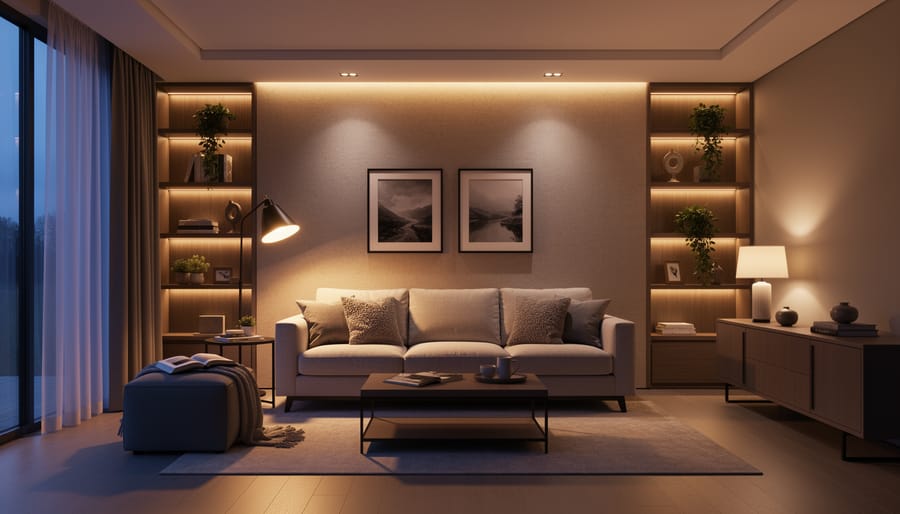
Light layering creates visual hierarchy by replicating how we naturally perceive depth in outdoor environments, where sunlight comes from multiple angles and intensities. When you position light sources at different heights, ceiling-mounted ambient fixtures overhead, mid-level task lights on work surfaces, and low accent lights near the floor, you introduce vertical contrast that helps the eye distinguish between foreground and background elements.
This vertical differentiation matters because uniform, single-source lighting flattens a space. Everything sits at the same visual “level,” making rooms feel two-dimensional and institutional. By varying light intensities across different layers, you create zones of brightness that draw attention where needed while allowing other areas to recede naturally.
The contrast between brighter task areas and softer ambient zones establishes focal points without harsh boundaries. A well-lit workstation stands out against a more subtly illuminated background, guiding occupant movement and attention through the space. In commercial settings, this hierarchy improves wayfinding and helps employees instinctively identify functional zones, reception areas feel welcoming with balanced ambient light, while conference rooms gain definition through layered sources that support both presentation and collaboration needs.
Balancing Light Distribution
When you use multiple light sources positioned at different locations and heights, you create what lighting designers call balanced distribution, illumination that reaches all areas of a space without extreme bright spots or shadows. This approach eliminates the common problem of a single overhead fixture casting harsh shadows and leaving corners dim.
The principle works because light from various angles fills in the gaps that any single source would miss. A ceiling fixture might illuminate the center of a room well but struggle to reach under cabinets or beside tall furniture. Adding task lights or wall-mounted fixtures compensates for these shortcomings, creating consistent brightness throughout the space.
This even distribution reduces eye strain significantly. When your eyes constantly adjust between very bright and very dark zones, such as a brightly lit desk surrounded by dim walls, the continuous pupil dilation and constriction causes fatigue. Multiple sources at moderate intensities maintain more uniform light levels, so your eyes work less hard throughout the day.
For commercial facilities, this translates directly to worker comfort and productivity. Studies show that balanced lighting reduces headaches and improves focus compared to single-source overhead systems, making the investment in layered design worthwhile beyond aesthetics alone.
The Three Types of Light Layers
Ambient Lighting: The Foundation Layer
Ambient lighting establishes the baseline visibility across an entire space, providing the foundational illumination that allows people to navigate safely and perform general activities. Unlike targeted or decorative lighting, this layer spreads light evenly throughout a room without creating harsh contrasts or deep shadows. Think of it as the canvas upon which the other lighting layers add detail and dimension.
In commercial environments, ambient lighting typically comes from ceiling-mounted fixtures, recessed downlights, or panel systems that distribute light across large floor areas. The goal is uniform coverage at a comfortable brightness level, usually measured between 300-500 lux for office spaces and 200-300 lux for warehouses or storage areas. This base layer should illuminate without overwhelming, creating an environment where eyes can adjust comfortably without strain.
For facilities seeking energy independence, solar-powered LED panels and fixtures deliver reliable ambient lighting without drawing from the grid. Modern solar LED systems can provide consistent overnight operation through battery storage charged during daylight hours, making them practical for warehouses, parking structures, and outdoor commercial areas where traditional electrical infrastructure may be costly to install or maintain.
The key to effective ambient lighting lies in even distribution rather than intensity alone. Multiple moderate-output sources positioned strategically typically outperform a single high-intensity fixture, reducing energy consumption while improving visual comfort across the space.
Task Lighting: The Functional Layer
Task lighting delivers concentrated illumination exactly where you need it for specific activities. Unlike ambient lighting that fills a room, task lighting creates focused pools of light over work surfaces, reading areas, or zones requiring visual precision. This layer targets the immediate activity without flooding the entire space.
Desks, kitchen counters, and assembly stations all benefit from dedicated task lighting. Common fixtures include adjustable desk lamps, under-cabinet strips, and swing-arm wall mounts that direct light precisely where hands and eyes meet the work. The goal is eliminating shadows and glare on the task surface while providing adequate brightness for comfortable, prolonged focus.
Intensity matters significantly with task lighting. The fixture should deliver enough lumens to prevent eye strain, typically 300 to 500 lux for general office work, higher for detailed tasks like circuit board inspection or surgical procedures. Positioning prevents shadows from your hands or body falling across the work area. Many modern task lights offer dimming capabilities, letting users adjust brightness to match both the activity and existing ambient levels.
Solar LED task lights have become practical for off-grid commercial applications. Battery-integrated models store daytime solar collection for evening use, delivering 400-600 lumens over focused areas without grid connection. Warehouses, remote construction offices, and agricultural facilities increasingly deploy these fixtures above workbenches and inspection stations, combining operational independence with lower lifecycle costs. The directional nature of task lighting makes it particularly efficient for solar power, you illuminate only the necessary surface rather than dispersing watts across unused space.
Accent Lighting: The Aesthetic Layer
Accent lighting serves as the finishing touch in a well-designed lighting system, creating visual drama and drawing attention to specific elements within a space. Unlike ambient and task lighting, which prioritize function, this layer focuses on aesthetic impact and architectural emphasis.
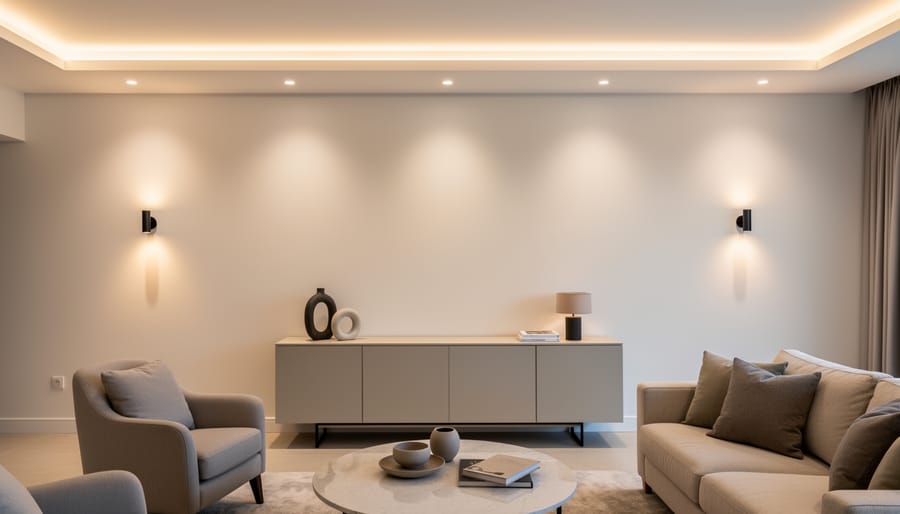
This type of lighting typically operates at lower intensities than the other layers, using focused beams to highlight artwork, architectural details, product displays, or landscape features. The strategic placement creates contrast and depth, guiding the eye toward intended focal points while adding dimension to otherwise flat surfaces.
Track lighting remains one of the most versatile accent solutions, particularly in commercial environments where display needs change frequently. Adjustable heads allow facilities managers to redirect beams as layouts evolve. Wall washers produce a smooth, even illumination across vertical surfaces, ideal for emphasizing textured walls or creating an expansive feel in narrow corridors.
Specialty fixtures such as uplights, spotlights, and picture lights offer targeted highlighting capabilities. In retail settings, accent lighting can increase perceived product value by up to 20% through professional presentation. For facilities prioritizing sustainability, solar-powered accent fixtures now deliver comparable intensity to grid-tied options while eliminating ongoing electricity costs.
The key to effective accent lighting lies in restraint. Overlighting defeats the purpose by eliminating contrast. A general guideline suggests accent fixtures should provide three times the illumination of surrounding ambient light to create noticeable emphasis without appearing harsh or theatrical.
Common Uses and Applications of Light Layering
Commercial and Industrial Applications
In commercial and industrial environments, light layering directly impacts operational efficiency, worker safety, and bottom-line costs. Facilities managers increasingly recognize that proper layering reduces accidents, improves employee performance, and cuts energy consumption compared to traditional single-source overhead systems.
Warehouses benefit significantly from layered approaches. High-bay ambient lighting provides baseline visibility across large floor areas, while task lighting concentrates illumination at workstations, packing areas, and inventory zones where workers need clear vision for detailed operations. Accent lighting highlights emergency exits, hazard zones, and critical pathways. This combination reduces eye strain during long shifts and minimizes errors in picking and packing operations. Solar LED high-bay fixtures work particularly well in facilities with suitable roof exposure, eliminating electrical infrastructure costs in new builds or expansions.
Office environments use layering to address varying needs throughout the day. Overhead ambient lighting establishes general visibility, desk-mounted task lamps give individual workers control over their immediate workspace, and accent fixtures create welcoming reception areas or highlight company branding. Properly layered office lighting has been shown to reduce headaches and improve concentration compared to uniform fluorescent coverage.
Manufacturing floors require robust layering for both productivity and compliance. Ambient lighting meets OSHA minimum standards across the facility, dedicated task lighting illuminates machine work areas and quality control stations, and accent lighting marks safety zones and equipment boundaries. Solar-powered solutions reduce electrical load in facilities with high daytime operations, particularly in metal fabrication, assembly operations, and outdoor manufacturing yards where traditional wiring presents installation challenges.
The layered approach allows facilities to dim or switch off layers during low-activity periods, achieving energy savings impossible with single-circuit systems.
Remote and Off-Grid Installations
Remote and off-grid locations present unique challenges for implementing light layering, but solar-powered systems have evolved to address these constraints without compromising on lighting quality. The key difference lies in energy budgeting, you must carefully calculate your daily lighting load against available solar generation and battery storage capacity.
For ambient lighting in off-grid settings, solar LED panels or fixtures with integrated batteries provide reliable base illumination. Modern solar LEDs consume 80-90% less power than traditional bulbs, making them ideal for continuous operation overnight. Position these fixtures to maximize coverage while minimizing the number of units needed, since each additional light increases your solar array and battery requirements.
Task lighting in remote installations benefits from strategic placement near work zones where activity actually occurs. Rather than illuminating entire spaces, concentrate higher-intensity solar fixtures where employees perform detailed work. Motion sensors further reduce energy consumption by activating task lights only when needed, extending battery life during cloudy periods.
Accent lighting becomes optional rather than essential in off-grid scenarios, though small solar spotlights can still highlight safety features like exits or hazard zones without significant power draw. The three-layer approach remains valid, but implementation prioritizes function over aesthetics.
Proper system sizing matters most, underestimating your lighting load leads to inadequate illumination during extended cloudy weather, while oversizing wastes capital on unnecessary panels and batteries. Professional load calculations ensure your layered lighting design operates reliably year-round, even in locations with seasonal solar variation.

Frequently Asked Questions About Light Layering
How much does it cost to implement light layering in a commercial facility? The upfront investment varies significantly based on facility size and existing infrastructure, but most commercial retrofits range from $2 to $8 per square foot when incorporating modern LED and solar-compatible fixtures. Energy savings typically offset installation costs within 2-4 years for most businesses, particularly when switching from single-source overhead lighting to an efficient layered approach. Solar-powered components can extend this payback period slightly but eliminate ongoing electricity costs for those fixtures.
What’s the minimum number of light layers needed for effective lighting design?
At minimum, you need two layers (typically ambient plus either task or accent) to gain functional benefits, though all three layers provide the most flexibility and control for commercial environments.
Does light layering increase energy consumption compared to single-source lighting?
When properly designed with LED technology, layered lighting typically reduces energy use by 30-50% because you illuminate only what’s needed rather than over-lighting entire spaces. The ability to control layers independently means you’re not running all fixtures at full brightness constantly.
Can solar-powered fixtures work for all three lighting layers?
Yes, modern solar LED technology supports ambient, task, and accent applications, though battery capacity and panel sizing require careful planning for layers that operate during evening hours or in interior locations with limited natural light exposure.
Is it feasible to retrofit existing facilities with layered lighting, or does it require complete renovation?
Most commercial spaces can be retrofitted with layered lighting using existing electrical infrastructure by adding task and accent fixtures to supplement overhead ambient lighting, making it a practical upgrade without major construction.
Can light layering improve employee productivity and safety? Research consistently shows that properly layered lighting reduces eye strain, improves focus on detail work, and decreases workplace accidents by eliminating dark corners and creating better visibility at critical task areas. Facilities managers report fewer headache complaints and improved worker satisfaction when they move from harsh overhead-only lighting to a balanced multi-layer approach.
For off-grid or remote facilities, solar-powered layered lighting offers particular advantages. You maintain full lighting functionality without trenching for electrical lines, and the modular nature of solar fixtures makes it simple to add layers incrementally as operational needs or budgets allow. Battery backup systems integrated with solar panels ensure your essential task lighting remains operational during power interruptions, which matters for safety-critical industrial environments.
Types or components
A complete light layering system comprises three distinct component types, each serving a specific function in the overall lighting design. These components work together to create balanced, functional illumination.
Ambient lighting forms the base layer, providing general illumination throughout a space. This typically includes ceiling-mounted fixtures, recessed lighting panels, or large-area luminaires that deliver uniform light distribution. In commercial settings, high-bay LED fixtures or solar-powered overhead systems serve this purpose.
Task lighting delivers concentrated illumination for specific work activities. Desk lamps, under-cabinet fixtures, machine work lights, and adjustable arm lamps fall into this category. These components produce focused beams that prevent eye strain during detailed operations.
Accent lighting adds visual interest and highlights architectural elements, products, or safety features. Track lights, spotlights, wall washers, and decorative fixtures create focal points and depth. In industrial environments, this layer often emphasizes signage, hazard zones, or navigation paths.
Each component operates at different intensities and heights, creating the layered effect. A properly designed system allows independent control of each layer, enabling users to adjust lighting levels based on time of day, activity, or occupancy requirements.