
 By gail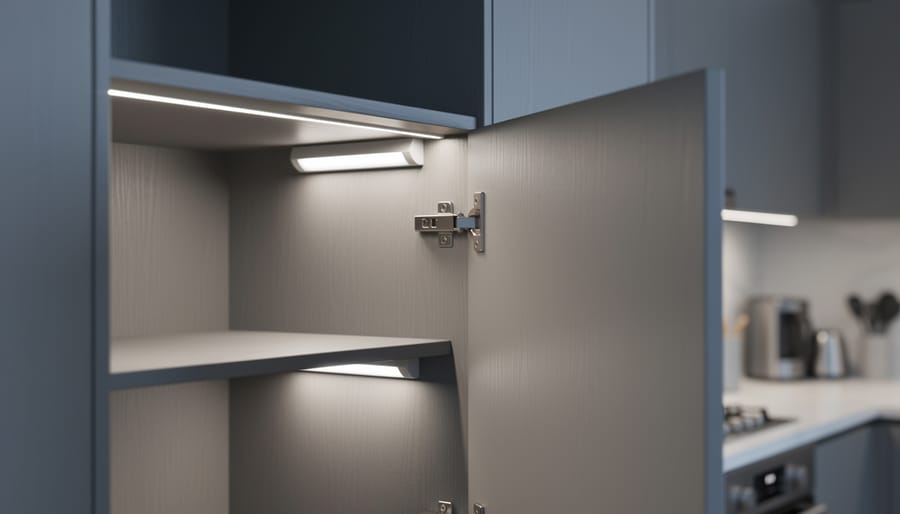
In-cabinet lighting transforms functional storage into illuminated, accessible space, and the right solution depends on your cabinet type, power access, and performance goals. Whether retrofitting commercial kitchen units, upgrading retail displays, or improving workplace storage visibility, eight proven approaches deliver reliable results: hardwired LED strips, plug-in puck lights, motion-activated bars, battery-powered modules, solar-powered systems for off-grid sites, wireless network-integrated options, color-tunable task strips, and ultra-low-profile tape lighting. Each serves distinct applications, from high-output task illumination in food prep areas to subtle accent lighting in hospitality environments.
The shift toward energy-efficient lighting has made in-cabinet installations more practical than ever. Modern LED systems consume 75-85% less energy than legacy halogen alternatives while delivering superior color rendering and lifespan. For facilities managers evaluating these options in 2026, the decision framework centers on three priorities: installation constraints (existing wiring, cabinet construction, and access limitations), operational requirements (brightness levels, color temperature, and control integration), and total cost of ownership (energy draw, maintenance intervals, and replacement cycles).
This guide presents eight actionable in-cabinet lighting ideas with technical specifications, real-world use cases, and implementation considerations. You’ll find selection criteria before the list, a comparative recap after, and answers to common integration questions, giving you the detail needed to specify and install the right solution for your application.
How We Selected These In-Cabinet Lighting Ideas
We evaluated dozens of in-cabinet lighting approaches and narrowed our recommendations to eight solutions that deliver measurable value across diverse commercial and residential contexts. Our selection process prioritized real-world performance over marketing claims, focusing on options that solve actual visibility and access challenges in cabinets ranging from retail displays to industrial storage.
Each idea in this guide meets the following criteria:
- Energy efficiency, Low power consumption suitable for continuous operation or integration with solar systems
- Installation flexibility, Options for retrofit, new construction, adhesive mounting, or screw-fix as project constraints dictate
- Solar and off-grid compatibility, DC voltage operation or minimal AC draw that pairs with battery-backed solar installations
- Application versatility, Proven effectiveness in commercial, industrial, and high-end residential environments
- Long-term reliability, Components with documented service life and readily available replacement parts
We favored lighting techniques that balance technical sophistication with straightforward deployment. A solution might offer advanced controls or tunable color, but if installation requires specialized trades or creates maintenance burdens, we noted those limitations. Similarly, the lowest-cost option isn’t always the best value when you factor in energy consumption over five or ten years, particularly in off-grid scenarios where every watt matters. This framework ensures the ideas presented address both immediate installation needs and ongoing operational efficiency.
1. LED Strip Lighting for Continuous Illumination
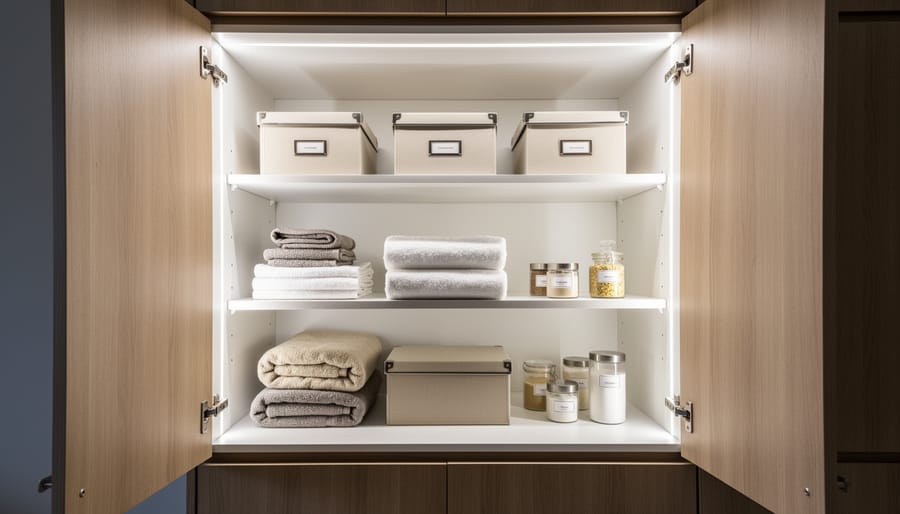
LED strip lighting delivers continuous, edge-to-edge illumination along cabinet interiors, eliminating dark corners and shadows that plague traditional single-point fixtures. These flexible circuit boards with surface-mounted LEDs run the full length or perimeter of a cabinet, producing uniform brightness that enhances product visibility in retail displays and simplifies inventory access in commercial storage.
The low power draw stands out. A typical 12V DC LED strip consumes 3-5 watts per meter, making it highly compatible with solar-powered systems and battery backup configurations common in off-grid facilities, outdoor kiosks, and remote telecom enclosures. Many strips operate directly on DC voltage, bypassing the need for AC inverters and reducing system complexity.
Installation flexibility matters in real-world deployments. Adhesive-backed strips peel and stick to clean cabinet surfaces in minutes, ideal for retrofits where drilling isn’t permitted or practical. Magnetic-mount versions attach to steel cabinet frames without adhesives, allowing easy repositioning or seasonal display changes in retail environments. Aluminum extrusion channels provide heat dissipation and a finished look for high-end residential and hospitality applications.
Dimming capabilities extend functionality. PWM-dimmable strips integrate with occupancy sensors or manual controls, letting facility managers dial brightness to task requirements and further reduce energy consumption during low-traffic periods. Some models offer CCT adjustment on a single strip, though this increases cost and complexity.
LED strips excel in shallow cabinets, glass-front showcases, and multi-shelf configurations where you need consistent light distribution without adding depth or blocking sightlines.
2. Puck Lights for Focused Task Lighting
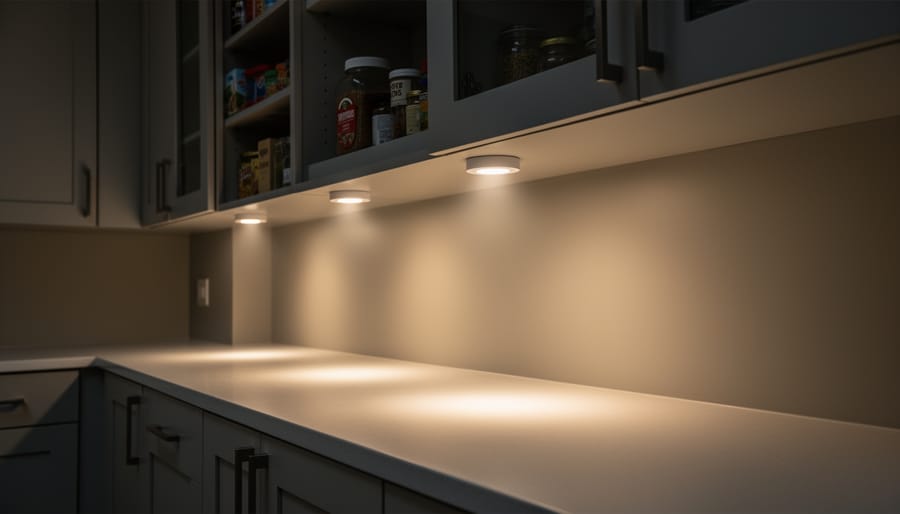
Puck lights deliver precise, concentrated illumination exactly where you need it, making them invaluable for deeper cabinets, display cases, and storage areas where uniform overhead lighting can’t reach. These compact, disc-shaped fixtures mount directly to cabinet surfaces with minimal installation effort, often using adhesive backing or simple screw mounts that require no complex wiring modifications.
For solar and off-grid applications, DC-compatible puck lights operate efficiently on 12V or 24V systems, drawing as little as 2 to 3 watts per fixture. This low power demand makes them practical for battery-backed solar installations in remote facilities, outdoor kiosks, or locations where grid access is costly. A typical 100Ah solar battery can power a dozen 3-watt puck lights for several nights without recharging.
Strategic spacing is essential for effective coverage. In deeper cabinets (18 to 24 inches), position puck lights every 12 to 16 inches along the cabinet ceiling or back wall to eliminate shadows and ensure consistent visibility. For retail displays showcasing jewelry or collectibles, closer spacing, 8 to 10 inches, creates more dramatic, even illumination that highlights product details.
Museums frequently deploy puck lights in enclosed display cases where heat buildup from traditional fixtures could damage sensitive artifacts. The cool operation of LED puck lights, combined with their focused beam patterns, allows curators to spotlight individual pieces without risking thermal damage. Retail environments use them in glass-fronted cabinets to draw attention to premium merchandise, while facility managers install them in parts storage and inventory cabinets to improve picking accuracy and reduce retrieval time.
3. Motion-Activated Cabinet Lights for Energy Savings
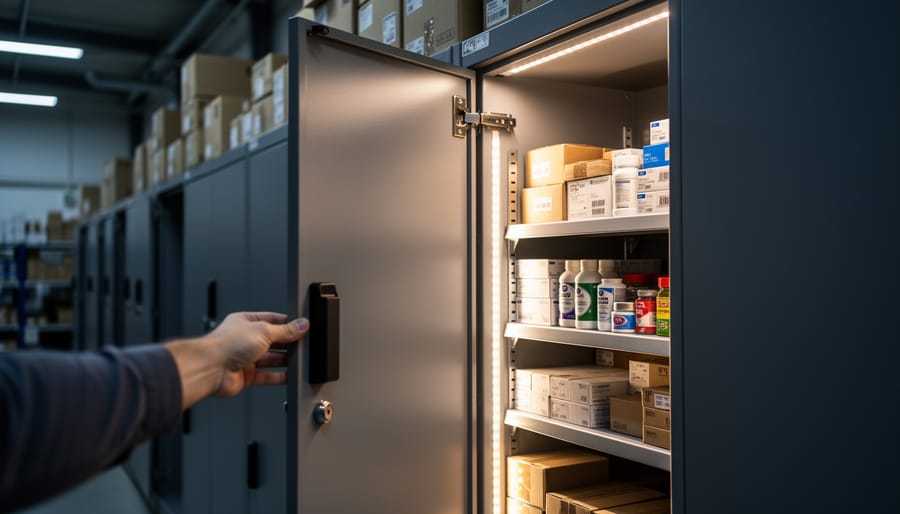
Motion-sensor-equipped LED fixtures eliminate wasted runtime by illuminating cabinets only when needed, when a door swings open, a hand reaches in, or a user steps within range. This on-demand operation cuts energy consumption by 60-80% compared to always-on fixtures, making motion-activated lights especially valuable in off-grid solar installations where every watt-hour counts. In warehouse storage cabinets, maintenance closets, and back-of-house areas where access is intermittent, these sensors deliver light precisely when and where it’s required, then switch off seconds after activity stops.
The energy savings compound quickly across multiple cabinets: a distribution center with fifty solar-powered cabinet lights on motion control can extend battery autonomy by days or reduce solar array size by a third. Because the fixtures consume negligible standby power, typically under 0.1 W, phantom load remains minimal even when sensors are active but lights are off. This efficiency aligns naturally with light layering strategies, allowing you to deploy motion-activated cabinet lights alongside ambient and task layers without overwhelming your power budget.
Most motion-activated cabinet fixtures offer adjustable sensitivity and delay settings, so you can fine-tune detection range and how long the light stays on after the last motion. Battery backup options, either integrated rechargeable cells or external packs, ensure uninterrupted operation during grid outages or extended low-sun windows, critical for facilities relying on solar microgrids. Retrofitting existing cabinets is straightforward: adhesive-mount sensors and magnetic LED strips require no drilling, and low-voltage DC variants connect directly to solar charge controllers or battery banks.
4. Linear LED Fixtures for Shelf-Level Illumination
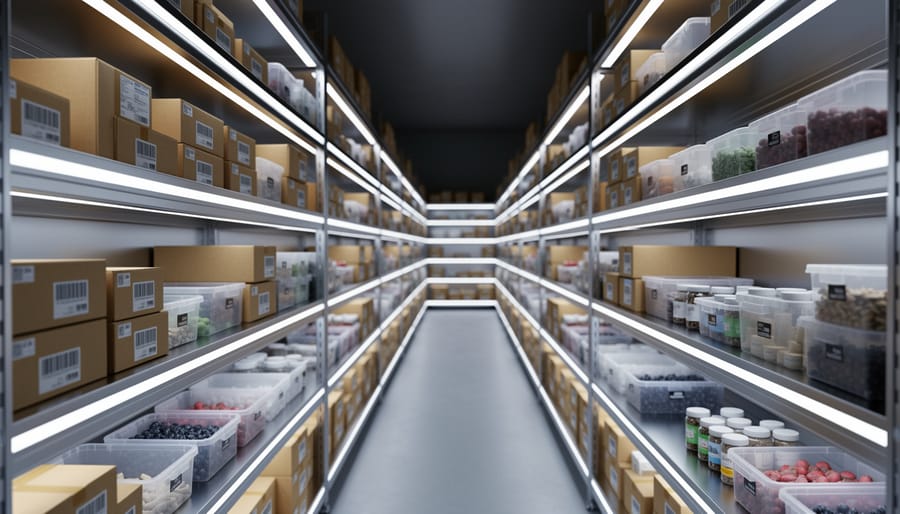
Linear LED fixtures offer a straightforward solution for cabinets with multiple shelves where overhead or door-mounted lights create shadowed zones. These slender bars mount horizontally under each shelf or vertically along cabinet sides, delivering focused illumination to every layer. The result is clear visibility of stock, supplies, or merchandise without tilting items forward or removing them to identify contents.
In multi-shelf cabinets, linear LEDs eliminate the guesswork during inventory checks. Warehouse staff can scan shelves at a glance, reducing picking errors and speeding replenishment cycles. Retail environments benefit similarly: stacked merchandise displays remain readable from top to bottom, encouraging sales without frustration. Commercial kitchens use under-shelf linear fixtures to light ingredient bins and prep storage, where quick identification of supplies matters during service rushes.
Most linear LED bars operate on 12V or 24V DC, making them compatible with solar battery banks without inverters. Wire multiple bars in parallel to a central solar charge controller, match the total wattage to your battery capacity, and you achieve off-grid shelf lighting for remote facilities or outdoor equipment cabinets. Choose fixtures rated for your environment, damp-location models for walk-in coolers, IP65-rated units for outdoor storage.
Installation typically requires mounting clips or adhesive channels along shelf fronts or cabinet frames. Low-profile designs stay hidden from view when doors open, preserving a clean aesthetic while ensuring every shelf level receives dedicated light.
5. Touch-Activated LED Modules for User Control
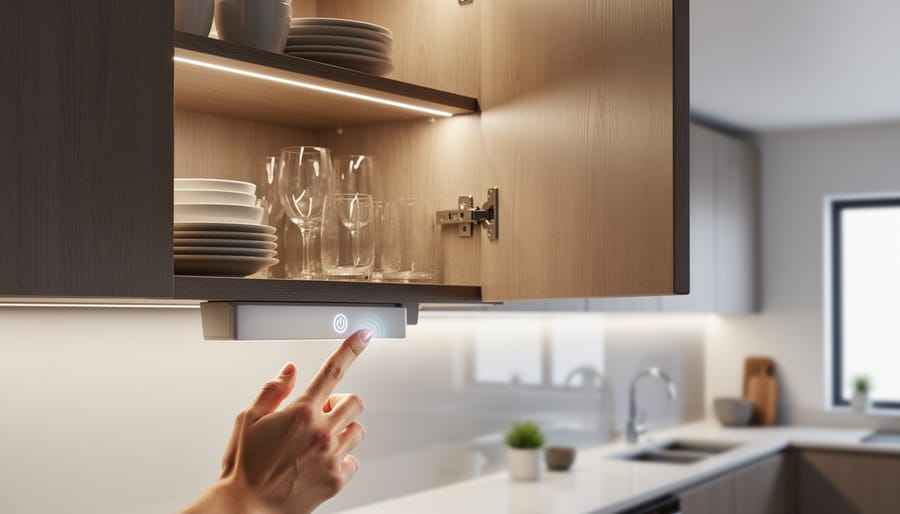
Touch-activated LED modules eliminate the need for wall switches or remote controls, letting users turn lights on, off, or dim them with a simple tap on the sensor surface. This approach proves invaluable in cabinets where running switch wiring is impractical or where users need immediate, intuitive control at the point of use. Touch-sensitive modules typically draw under 0.5 watts in standby mode, making them compatible with small solar systems that power medical carts, hospitality minibars, museum display cases, or accessible workstations where residents or staff have mobility limitations.
In exhibit environments, touch modules mounted inside cabinet doors let docents adjust lighting intensity without leaving the display area. Hospitality applications include guest room wardrobes and beverage refrigerators, where tapping a recessed sensor provides instant illumination. Facilities managers installing accessible designs for aging-in-place facilities or ADA-compliant offices appreciate the low-effort activation, which reduces physical strain compared to toggle switches. The modules’ low standby consumption also aligns with solar DC circuits used in remote kiosks and telecom enclosures, though designers should account for cumulative phantom load when scaling across multiple cabinets. Some touch-activated modules integrate with broader outdoor solar options through DC voltage compatibility, enabling unified lighting strategies for facilities that blend interior and exterior applications. Installation typically requires only adhesive mounting and quick-connect wiring, making retrofits straightforward even in finished cabinetry.
6. Color-Tunable LED Lighting for Display Flexibility
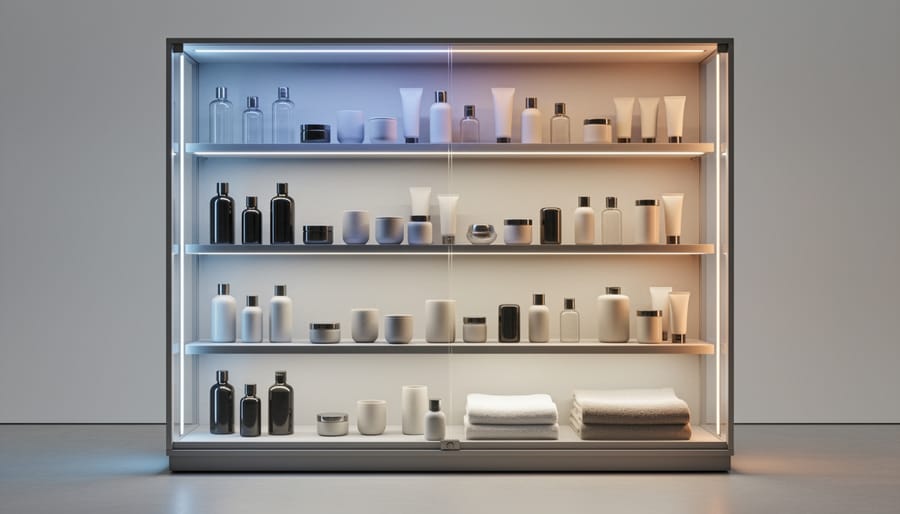
Color-tunable LED lighting gives users the ability to adjust color temperature on demand, shifting from warm white (2700K, 3000K) to cool white (5000K, 6500K) with a controller or dimmer. This flexibility is particularly valuable in retail showcases where different merchandise benefits from different lighting moods: warm tones enhance wood finishes, textiles, and jewelry, while cooler temperatures make electronics, cosmetics, and high-tech products appear crisp and modern. Art galleries use CCT-adjustable fixtures to match lighting to specific artworks or exhibitions, adapting the visual experience without changing hardware. Upscale commercial interiors, hotel lobbies, executive offices, high-end restaurants, deploy color-tunable cabinet lighting to shift ambiance throughout the day or align with branding requirements.
These systems often integrate with smart lighting controls allowing centralized management and scheduling across multiple cabinets. The trade-off is slightly higher power consumption compared to fixed-CCT LEDs, typically 10-20% more due to the dual-chip architecture and control circuitry. For solar installations, this means sizing the array and battery bank to accommodate peak draw when both warm and cool diodes operate simultaneously. Designers should calculate the total wattage at maximum output and ensure inverter or DC driver capacity matches. Despite the added power requirement, color-tunable LED options deliver measurable ROI in display-driven environments where lighting quality directly influences customer perception and sales performance.
7. Battery-Backup LED Lights for Remote and Off-Grid Cabinets
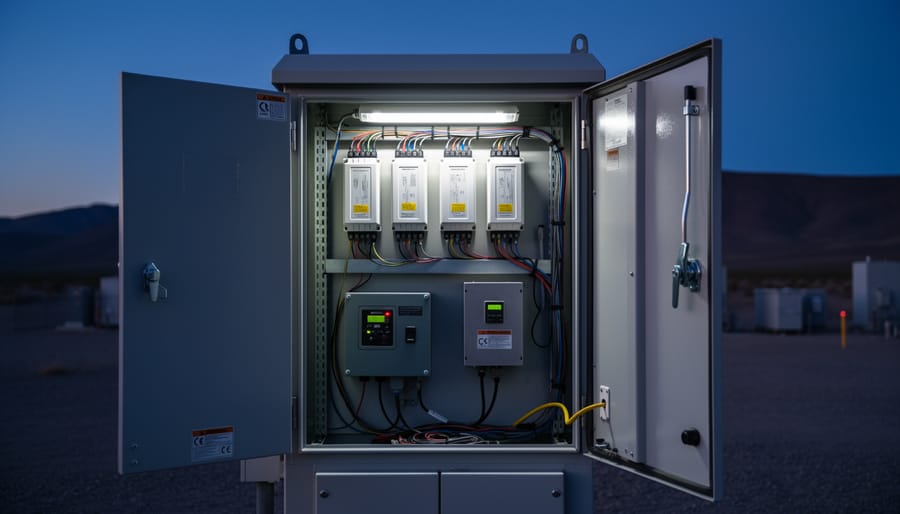
Battery-backup LED lights combine integrated rechargeable batteries with efficient LED modules to deliver reliable cabinet illumination where grid power is unavailable or unreliable. These self-contained fixtures charge via solar panels, AC adapters, or DC power sources during daylight or grid-up periods, then provide continuous lighting during outages or overnight operation without external wiring.
Most battery-backup units run on lithium-ion or lithium iron phosphate (LiFePO4) batteries sized for autonomy periods ranging from 4 to 12 hours, depending on fixture wattage and battery capacity. A typical 3-watt LED strip with a 2000mAh battery delivers roughly six hours of continuous illumination, while larger 10,000mAh systems can power multiple puck lights or linear bars through an entire night. Solar charging compatibility makes these fixtures practical for telecom enclosures, roadside equipment cabinets, and rural utility installations where trenching power lines is prohibitively expensive.
The fixtures automatically switch to battery mode when input voltage drops, ensuring uninterrupted access to critical inventory or equipment displays during grid failures. Outdoor kiosks selling tickets, maps, or information materials rely on battery-backup cabinet lighting to maintain 24-hour visibility in parking lots, trailheads, and remote tourism sites. Emergency storage cabinets in hospitals, fire stations, and industrial facilities use these systems to guarantee first responders can locate supplies during power outages.
Installation requires minimal wiring since solar panels connect directly to the fixture’s charge controller. Look for models with charge status indicators and low-voltage cutoff protection to prevent battery damage from deep discharge.
8. Slim-Profile LED Panels for Shallow or Built-In Cabinets
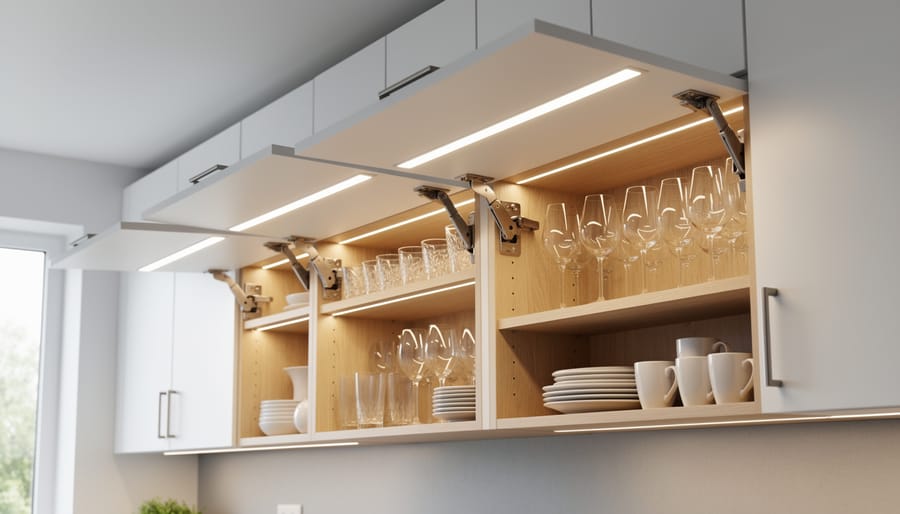
Slim-profile LED panels solve the persistent challenge of lighting cabinets where depth is measured in millimeters, not centimeters. These fixtures typically range from 7 to 15 millimeters thick, fitting into shallow medicine cabinets, recessed display cases, and laboratory storage units without sacrificing interior clearance. The two dominant technologies are edge-lit and backlit designs. Edge-lit panels use LEDs mounted along the perimeter with a light guide plate that distributes illumination evenly across the surface, while backlit panels position LEDs directly behind a diffuser for more uniform output and slightly greater thickness.
Heat dissipation is minimal due to the distributed LED layout and aluminum backing, making these panels safe for temperature-sensitive environments like pharmaceutical storage or electronics display cabinets. Medical facilities use them in sterile supply cabinets where cleanability and low profile matter; high-tech retail integrates them into glass showcases to illuminate products without visible bulky fixtures.
For solar installations, slim panels drawing 8 to 15 watts operate efficiently on 12V or 24V DC, requiring only thin wiring that routes easily through tight spaces. Installation depth of 20 millimeters or less means they retrofit into existing shallow cabinets or mount flush in new construction. Facilities managers appreciate the combination of unobtrusive design and robust light output, typically 80 to 100 lumens per watt, which keeps battery banks small and solar panel requirements modest even in multi-cabinet deployments.
Key Considerations When Choosing In-Cabinet Lighting
Selecting the right in-cabinet lighting requires balancing technical specifications with your operational constraints and budget. Start with voltage compatibility: AC-powered fixtures suit grid-connected buildings, while DC LED systems integrate seamlessly with solar setups and battery banks, eliminating inverter losses. If you operate remote kiosks, telecom enclosures, or facilities where grid power is prohibitively expensive, solar DC options reduce recurring costs and improve reliability.
Color temperature influences both task performance and display appeal. Cool white (4000-5000K) enhances visibility for inventory management and technical work, while warm white (2700-3000K) creates inviting displays in retail and hospitality settings. Installation constraints matter: adhesive-backed strips and magnetic puck lights require no drilling, preserving cabinet finishes, whereas linear fixtures may need mounting hardware and slightly more clearance.
Control options directly affect energy consumption. Manual switches work well for predictable, scheduled use. Motion sensors cut phantom load by up to 80 percent in low-traffic areas, making them ideal for solar-powered applications with limited battery capacity. Smart controls allow remote scheduling and dimming but add complexity and standby power draw. Calculate your total energy budget by summing fixture wattage, multiplying by daily run hours, and factoring in your power source capacity to ensure sustainable operation without oversizing your solar array or battery bank.
Frequently Asked Questions
Can in-cabinet lighting run on solar power?
Yes, LED in-cabinet lighting is highly compatible with solar power systems due to its low voltage DC operation and minimal energy draw. Most LED fixtures can connect directly to 12V or 24V solar circuits, making them ideal for off-grid installations, remote facilities, or locations where grid power is expensive or unavailable.
What’s the best color temperature for task lighting versus display lighting?
Task lighting typically benefits from cooler color temperatures (4000K-5000K) that enhance visibility and reduce eye strain during inventory management or detailed work. Display lighting often uses warmer temperatures (2700K-3000K) to create an inviting atmosphere in retail or hospitality settings, though the ideal choice depends on the products or materials being showcased.
How do motion sensors affect battery life in solar-powered cabinet lighting?
Motion sensors dramatically extend battery life by activating lights only when needed, reducing runtime by 70-90% compared to continuous operation. This makes them especially valuable in solar installations where energy storage is limited, though the sensor itself draws a small standby current that should be factored into system sizing.
What installation methods require no drilling?
Adhesive-backed LED strips, magnetic-mount puck lights, and double-sided tape fixtures allow secure installation without drilling holes in cabinet surfaces. These methods work well for rental properties, temporary displays, or situations where preserving cabinet integrity is important, though surface preparation is critical for long-term adhesion.
How do I size a solar system for cabinet lighting?
Calculate total wattage of all fixtures, multiply by expected daily runtime hours to get watt-hours, then add 25-30% for system losses and battery charging inefficiency. For example, 10 watts of LED lighting running 6 hours daily requires roughly 75-80 watt-hours of solar generation and battery storage capacity to maintain reliable operation.
These answers address the most common questions decision-makers face when evaluating in-cabinet lighting for commercial or residential applications. Solar compatibility opens new possibilities for facilities managers working with remote structures, outdoor installations, or buildings where electrical upgrades are cost-prohibitive. Color temperature selection directly affects both functionality and user experience, making it a critical specification rather than an aesthetic afterthought. Motion sensor integration represents one of the simplest ways to improve energy efficiency without compromising lighting quality or availability when needed. No-drill installation methods reduce labor costs and preserve asset value, particularly important in leased spaces or when cabinet replacement is planned. Proper solar system sizing ensures reliable performance and prevents the frustration of undersized batteries or inadequate solar panel capacity during periods of reduced sunlight.
Strategic in-cabinet lighting transforms cabinets from dark storage boxes into efficient, functional workspaces and compelling display environments. The eight techniques outlined here offer proven solutions for commercial facilities, retail showcases, and off-grid installations where visibility directly impacts productivity, sales, and user satisfaction.
Solar-powered LED options have moved from niche curiosity to practical mainstream choice. Advances in panel efficiency and battery storage now support reliable cabinet lighting in telecom shelters, remote kiosks, rural healthcare facilities, and any location where grid extension costs exceed the investment in a solar system. Even grid-connected operations benefit from solar cabinet lighting as a hedge against outages and rising utility rates.
Before selecting a solution, evaluate your specific requirements. Consider the cabinet’s purpose, task lighting for inventory management demands different characteristics than accent lighting for retail displays. Assess your power infrastructure: DC solar circuits, standard AC mains, or battery backup needs. Factor in control preferences, whether manual switches, motion sensors, or smart integration. Calculate the total wattage across all fixtures to ensure your power source can sustain the load with margin for future expansion.
The right in-cabinet lighting delivers immediate returns through improved visibility, reduced eye strain, and enhanced product presentation. Match the technique to your environment, and you will create spaces that work harder and look better.