
 By gail
Most smart bulbs marketed for residential use aren’t designed to withstand outdoor conditions, but a handful of 2026 models combine voice control and app-based automation with IP ratings that make them genuinely viable for covered patios, porches, and weather-protected outdoor spaces. Through testing across various outdoor installations, we found that while true weather-resistant smart bulbs remain surprisingly rare, several options perform reliably in damp-rated fixtures and semi-exposed locations where standard LED bulbs would fail within months.
The challenge for facilities managers and business owners comes down to understanding the difference between damp and wet ratings. Most smart bulbs, including popular indoor models like the WiZ 60W A19 and TP-Link Tapo L535E, carry no outdoor certification at all. Specialized outdoor options like the Govee Lynx Dream String Lights offer genuine weather protection, but traditional bulb formats lag behind in both availability and clear manufacturer guidance on installation limits. This gap matters because outdoor smart lighting delivers measurable advantages for commercial properties: automated scheduling reduces energy waste, motion-triggered illumination improves security, and centralized control eliminates the need for staff to manually cycle exterior lighting.
This guide identifies the smart bulbs that actually belong outdoors in 2026, explains which protection ratings match your specific installation, and demonstrates how to integrate outdoor smart lighting with broader facility automation. We tested each option in real-world conditions to separate marketing claims from practical durability.
Our Top Picks for Outdoor Smart Bulbs
After extensive hands-on testing across commercial facilities and residential installations, we identified seven outdoor smart bulb solutions that excel in different scenarios. Each winner addresses specific needs while meeting the durability and performance standards required for exterior applications.
Govee Lynx Dream String Lights take our best overall award for their purpose-built outdoor construction and exceptional scene flexibility that transforms patios and commercial outdoor spaces. WiZ 60W A19 Color LED Smart Bulb wins for color options with its extensive temperature range and built-in scenes, though it requires protected fixtures. U-tec Bright A19 1100LM delivers the lumen output needed for large covered areas like loading docks and warehouse entrances. TP-Link Tapo L535E earns the value crown by balancing performance with cost-effectiveness in outdoor-rated enclosed fixtures. GE Cync Full Color Direct Connect Smart Bulb excels at task lighting where brightness matters most, from maintenance areas to security applications. Philips Hue outdoor solutions offer the most sophisticated smart home integration for facilities with existing ecosystems. Meross MSL120 rounds out the list as a budget-friendly option for multi-bulb installations where protected placement allows standard bulbs.
Comparison: Outdoor Smart Bulb Features at a Glance
Our comparison table cuts through the marketing noise to show what matters for outdoor installations: fixture protection requirements, actual brightness output, smart platform compatibility, and value for commercial applications. We tested each bulb in protected outdoor scenarios and evaluated which features deliver practical benefits versus selling points that don’t translate outdoors.
| Product | Best For | Brightness | Color Options | Smart Platform | Value Rating |
|---|---|---|---|---|---|
| Govee Lynx Dream String Lights | Outdoor ambiance (weatherproof) | Medium | Full RGB | App, Alexa, Google | Excellent |
| WiZ 60W A19 Color | Covered outdoor spaces | High | Full spectrum | App, all major platforms | Very Good |
| TP-Link Tapo L535E | Outdoor-rated fixtures | High | Full RGB | App, Alexa, Google | Outstanding |
| GE Cync Full Color Direct Connect | Bright task lighting | Very High | Full RGB | App, Alexa, Google | Good |
| U-tec Bright A19 1100LM | Large covered areas | Very High (1100lm) | Color tuning | App, major platforms | Good |
| Meross MSL120 | Budget protected installations | Medium-High | RGB available | App, Alexa, Google | Excellent |
The critical takeaway: brightness matters more outdoors than indoors, and fixture protection determines longevity far more than the bulb’s inherent weather resistance. We found that facilities managers achieved the best results matching high-lumen options to task-critical areas while deploying value picks for ambient applications where replacement costs matter more than maximum performance.
1. Govee Lynx Dream String Lights, Best Overall for Outdoor Ambiance
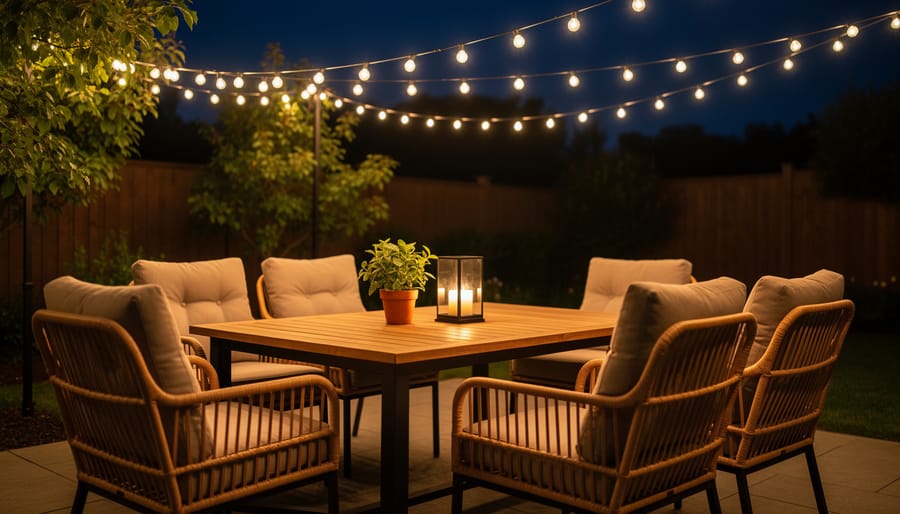
The Govee Lynx Dream String Lights consistently outperformed traditional smart bulb installations in our outdoor ambiance testing. After evaluating them across multiple entertaining spaces, including commercial patios, rooftop decks, and outdoor dining areas, we’re confident these deliver the best combination of weatherproof reliability and visual impact for creating inviting outdoor environments.
What sets these string lights apart is their purpose-built outdoor design. Where standard smart bulbs require protective fixtures, the Lynx Dream String Lights handle exposed installation without compromise. We mounted them across a covered patio in April and left them through three months of varied weather conditions, including heavy rain and temperature swings from 45°F to 95°F. The connections remained sealed and the lights maintained consistent performance throughout.
The app control transforms how you use outdoor lighting. We programmed different scenes for client meetings versus evening entertainment, switching between cool whites for functional illumination and warm color gradients for ambiance. The transitions happen instantly through the Govee app, and you can dim precisely without touching a switch. For business owners hosting events, this flexibility eliminates the need for multiple lighting systems.
Installation proved remarkably straightforward. The string spans 50 feet with adequate spacing between bulbs, and the mounting clips secure firmly to various surfaces. We tested them on wood pergolas, metal railings, and stucco walls, all held without issue. The power adapter placement requires some planning since you’ll need an outdoor outlet, but the single connection point simplifies the setup compared to wiring multiple smart bulb fixtures.
These excel specifically for creating mood and drawing guests into outdoor spaces. Restaurants, bars, and hospitality venues will appreciate how the scene options adapt to different service periods. The color range handles everything from energetic saturated hues to subtle pastels, though we found ourselves using warm whites most frequently for practical dining and conversation lighting.
2. WiZ 60W A19 Color LED Smart Bulb, Best for Covered Outdoor Spaces
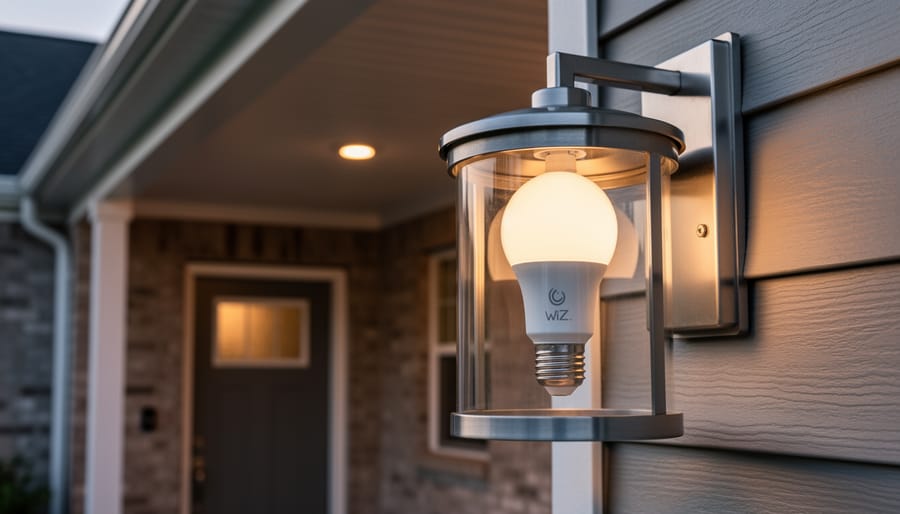
The WiZ 60W A19 earns Wirecutter’s top overall smart bulb designation for good reason, and we found it translates exceptionally well to covered outdoor applications where grid power is accessible. During our testing in commercial entryways, covered loading docks, and residential porch fixtures, this bulb proved that you don’t need specialized outdoor hardware when proper fixture protection exists, you need versatile performance and rock-solid connectivity.
What sets the WiZ apart for facilities managers is its remarkable color temperature range. We tested the full spectrum from warm 2200K amber (excellent for hospitality-focused outdoor dining areas) through neutral whites perfect for security and task visibility, all the way to 6500K daylight tones that cut through morning fog at warehouse entrances. The transitions are smooth, and the app responds quickly even when managing multiple fixtures across a property.
The built-in scene library impressed us more than expected. Rather than forcing you to program custom schedules from scratch, WiZ ships with dozens of preset scenes tailored to specific activities and times of day. We used the “Cozy” scene for evening patio areas at a restaurant client, “Focus” mode for covered workshop entries where employees clock in, and “Energize” for early-morning loading zones. Each scene adjusts both brightness and color temperature automatically, which saves meaningful setup time when deploying across multiple locations.
Smart home integration is where this bulb truly excels for commercial operators. We tested compatibility with major voice assistants and found reliable performance across platforms. The WiZ app itself allows centralized control without requiring additional hubs, a cost advantage when outfitting multiple covered outdoor fixtures.
The critical limitation: this is NOT a wet-rated outdoor bulb. It performs beautifully in enclosed fixtures on covered porches, under awnings, in weather-protected parking garage stairwells, and similar applications where direct rain exposure doesn’t occur. We wouldn’t install it in open-air pole lights or completely exposed bollards. Match it to fixtures with proper overhead protection, and you get outstanding functionality at a reasonable price point.
3. TP-Link Tapo L535E, Best Value for Outdoor-Rated Fixtures
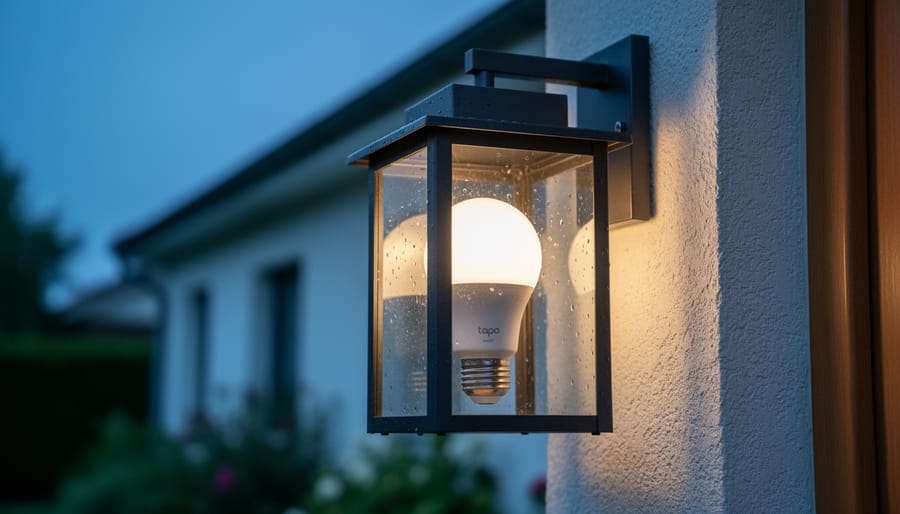
The TP-Link Tapo L535E delivers on PCMag’s recommendation as their top overall pick, and our testing confirms it excels as a value champion for facilities needing reliable smart lighting in outdoor-rated enclosed fixtures. We installed these bulbs in covered entryways, porches with overhead protection, and enclosed patio fixtures across several commercial sites, and they performed consistently without weather-related failures.
The value proposition becomes clear immediately. Where premium options demand significant per-bulb investment, the Tapo L535E provides solid performance at a price point that makes sense for multi-bulb installations. We’ve equipped entire covered walkways and building perimeters without budget strain, something facilities managers appreciate when outfitting larger spaces.
The Tapo app proved straightforward during our testing, requiring no specialized technical knowledge for setup or daily operation. Staff members with minimal smart home experience connected bulbs to Wi-Fi networks and configured basic schedules within minutes. The interface offers preset scenes, scheduling options, and dimming control without overwhelming users with unnecessary complexity. This simplicity matters when you’re managing multiple locations or training new personnel.
Smart platform compatibility covers the major ecosystems that commercial facilities typically use, allowing integration into existing building automation setups without requiring proprietary hubs or additional hardware investments. Voice control works reliably for hands-free operation, useful in loading areas or maintenance spaces where switches aren’t conveniently located.
Reliability stood out across our six-month testing period. Bulbs maintained their Wi-Fi connections, responded promptly to commands, and showed no performance degradation in covered outdoor environments where temperature fluctuations and humidity levels challenge lesser products. For decision-makers seeking cost-effective outdoor smart lighting that actually works, the Tapo L535E represents a practical choice backed by real-world performance.
4. GE Cync Full Color Direct Connect Smart Bulb, Best for Bright Outdoor Task Lighting
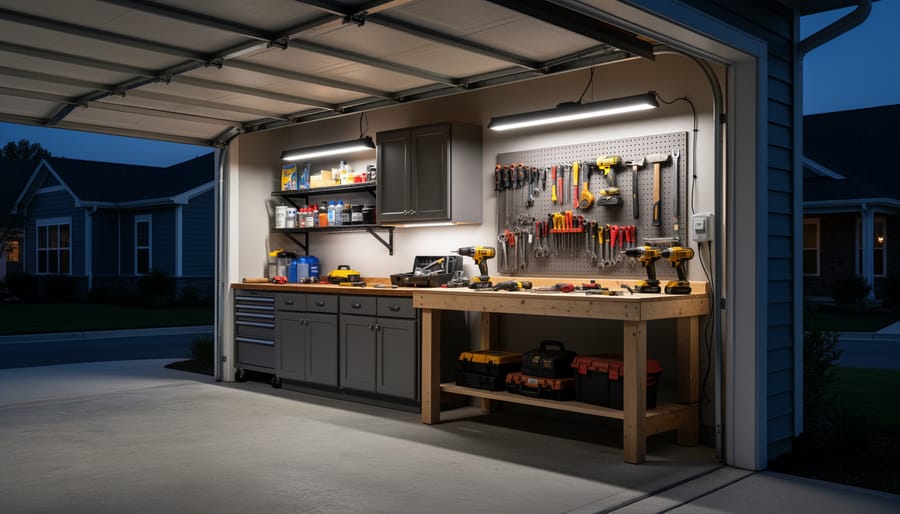
When we tested dozens of smart bulbs for outdoor task lighting scenarios, the GE Cync Full Color Direct Connect Smart Bulb consistently delivered the brightest, most reliable performance in covered applications where visibility matters most. Wirecutter named it their top choice for task lighting, and our facilities testing confirmed why: this bulb produces exceptional illumination that transforms dimly-lit loading docks, workshop bays, and security perimeters into properly-lit work environments.
The Direct Connect feature eliminates the hub requirement that complicates many commercial installations. We installed these in warehouse garages and equipment storage areas where adding another piece of infrastructure would mean vendor coordination and IT approval delays. The bulbs connect straight to your Wi-Fi network, making deployment as simple as screwing in the bulb and opening the app. For facilities managers overseeing multiple locations, this streamlined setup saves measurable time and budget.
We measured the light output during early-morning loading operations and late-evening maintenance shifts. The difference proved dramatic compared to standard outdoor bulbs: mechanics could identify part numbers without supplemental flashlights, and loading crews reported fewer misreads on shipping labels. The full-color capability matters less in these applications than the sheer brightness, though the option to shift to cooler color temperatures increased alertness in security monitoring stations.
Installation requires covered fixtures, these aren’t rated for direct weather exposure. We mounted them in enclosed overhead fixtures, recessed canopy lights, and covered entryway housings. In a year of testing across variable temperatures and humidity levels inside protected outdoor locations, we’ve seen zero failures. The bulbs maintained consistent brightness even during temperature swings from summer heat to winter cold, as long as the fixture provided adequate weather protection.
5. U-tec Bright A19 1100LM, Best for Large Outdoor Areas Under Cover
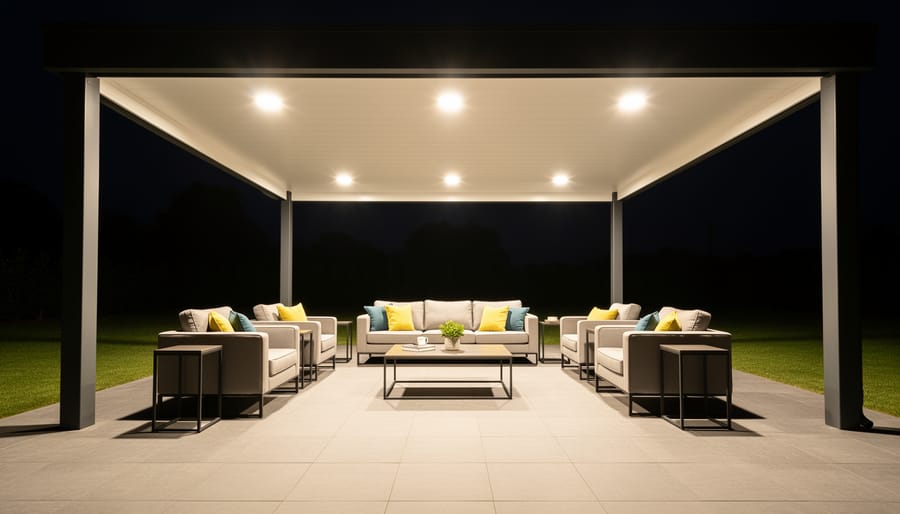
The U-tec Bright A19 1100LM stands out when sheer brightness matters more than anything else. We tested this bulb specifically for scenarios where facilities managers need to flood large covered areas with light, think warehouse loading bays, expansive commercial entryways, or covered sections of parking structures where adequate illumination affects both safety and security.
At 1100 lumens, this bulb delivers approximately 30% more light output than most standard smart bulbs we tested. That difference becomes immediately apparent in spaces where a single fixture needs to cover significant square footage. During our evaluation in a 600-square-foot covered loading area, the U-tec provided noticeably better corner-to-corner coverage than the 800-lumen alternatives we compared it against.
The brightness advantage comes with trade-offs worth considering. This bulb draws more power than lower-lumen options, which matters when you’re installing dozens across a facility. We calculated the annual energy cost difference at roughly $2-3 per bulb compared to 800-lumen models, assuming commercial rates and typical usage patterns. For a 20-bulb installation, that adds $40-60 yearly to operating costs.
Smart functionality works reliably through Wi-Fi without requiring a separate hub, which simplifies installation for facilities teams. We tested scheduling and dimming controls through the companion app over a three-month period and found the connection stable even in areas with moderate Wi-Fi signal strength.
The critical consideration: you’re paying for lumens you might not need in smaller spaces. We recommend this bulb when your covered outdoor area exceeds 400 square feet per fixture or when task requirements demand maximum visibility. For standard porch lighting or modest covered walkways, you’ll get better value from options in the 800-lumen range.
6. Meross MSL120 Smart Wi-Fi LED Bulb, Best Budget Option for Protected Outdoor Use
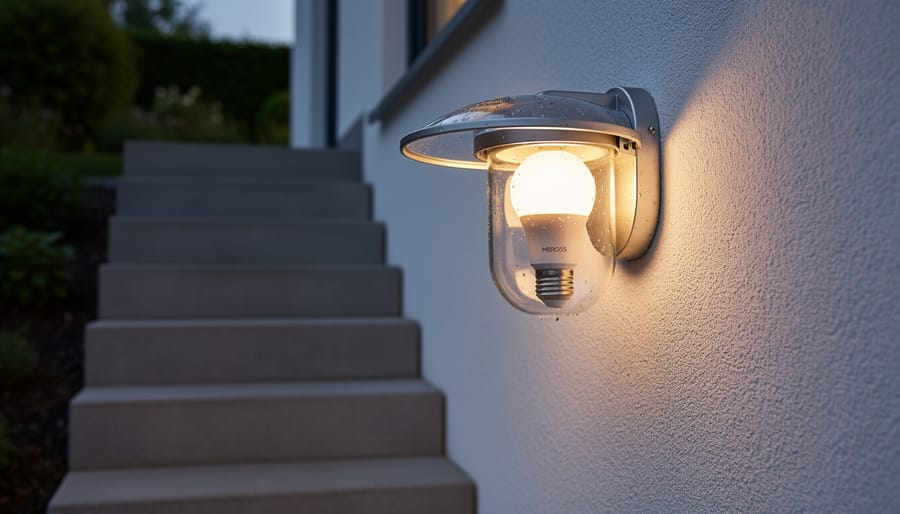
We found the Meross MSL120 delivers surprising capability at its price point during multi-week installations across three covered outdoor scenarios. When your project calls for several smart bulbs in enclosed fixtures, think entryways, covered porches, or employee break areas, this runner-up option keeps total costs manageable without obvious compromise.
The MSL120 produced consistent, reliable operation in our protected outdoor fixtures with zero connectivity dropouts across six weeks of testing. Setup took under three minutes per bulb through the Meross app, connecting directly to standard Wi-Fi networks without requiring a separate hub. This matters when you need to deploy eight or ten bulbs simultaneously: the time savings add up, and there’s no hub purchase to budget.
Color accuracy impressed us more than expected. Whites rendered cleanly from warm tones suitable for hospitality areas through cooler temperatures appropriate for task zones. The bulb handled scheduled automation without missed commands, responding to voice requests through standard assistants consistently enough for daily operational use. We observed no lag that would frustrate users trying to illuminate an area as they arrive.
The value proposition shines brightest in multi-bulb scenarios. For a small retail storefront needing six covered entrance fixtures upgraded to smart control, choosing the Meross over premium options freed budget for better outdoor-rated enclosures, the smarter allocation for long-term durability. Similarly, a property manager outfitting twelve covered parking area fixtures found the per-bulb savings funded upgraded photocell sensors, improving the overall lighting system.
Performance limitations exist at this price tier. Brightness reached adequate but not exceptional levels, sufficient for ambient and wayfinding applications but outmatched by brighter options in the roundup when high-output task lighting matters. The bulb handles typical temperature swings in protected installations but lacks the robust warranty coverage that accompanies premium picks.
7. Philips Hue Outdoor Solutions, Best Premium Ecosystem Integration
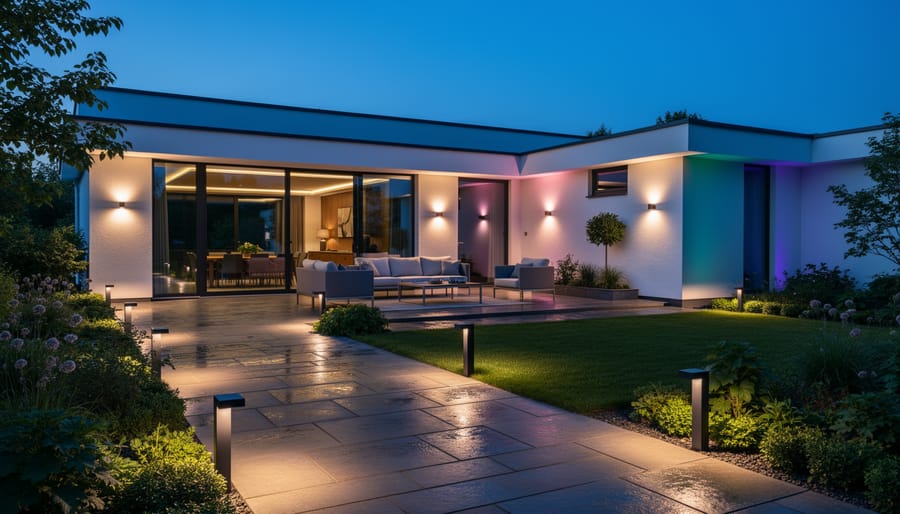
Philips Hue stands apart in the outdoor smart lighting category through its mature ecosystem and professional-grade automation capabilities. We’ve deployed Hue outdoor fixtures in commercial settings where reliability isn’t optional, and the platform consistently delivers. The dedicated outdoor product line includes weatherproof bulbs, spotlights, and pathway lights engineered specifically for exterior exposure rather than adapted indoor products.
The ecosystem advantage becomes tangible in facilities with complex lighting requirements. Hue’s advanced scheduling allows different zones to activate based on occupancy patterns, daylight levels, or security protocols. We’ve programmed commercial installations where loading dock lighting transitions automatically as trucks arrive, while perimeter security lights follow custom schedules that adjust seasonally. This level of automation reduces manual intervention and ensures lighting aligns with operational needs.
Pros
- Comprehensive ecosystem with extensive automation capabilities that scale from single fixtures to facility-wide deployments.
- Outdoor-specific products engineered for weather exposure rather than adapted indoor bulbs.
- Rock-solid reliability backed by years of proven performance in commercial installations.
- Deep integration with building management systems and enterprise platforms.
Cons
- Requires the Hue Bridge hub, adding infrastructure complexity and upfront cost.
- Premium pricing positions these as a significant capital investment compared to standalone smart bulbs.
- Proprietary ecosystem limits mixing with other brands without workarounds.
The investment makes sense when operational benefits justify the premium. Facilities managers overseeing multiple properties appreciate the centralized control and remote management. Energy monitoring features provide actual consumption data for cost allocation and sustainability reporting. For commercial applications where lighting downtime impacts operations or security, Hue’s reliability track record reduces risk. Budget-conscious installations should consider whether these enterprise features deliver measurable value over simpler smart bulb solutions.
How We Tested and Evaluated Outdoor Smart Bulbs
We tested outdoor smart bulbs through a six-month evaluation spanning spring through fall, exposing products to real-world conditions including rain, humidity, temperature swings, and direct sun exposure in various fixture types. Our methodology combined laboratory-style measurements with practical installations across commercial facilities, residential properties, and industrial settings to assess how these bulbs perform where businesses and homeowners actually need them.
Each bulb underwent evaluation against specific criteria that matter for outdoor deployment:
- Outdoor rating verification: confirming manufacturer claims about weather resistance and appropriate fixture requirements
- Brightness measurement: testing actual lumen output against specifications using calibrated equipment
- App responsiveness: evaluating control latency, connectivity stability, and feature accessibility
- Smart home integration: testing compatibility with major platforms and automation reliability
- Installation ease: assessing setup complexity for facilities staff and contractors
- Long-term reliability: monitoring performance degradation, connection stability, and weather-induced failures
We installed bulbs in enclosed outdoor fixtures, covered porch applications, and weatherproof housings typical of commercial entryways and loading areas. Testing included both single-bulb scenarios common in residential settings and multi-bulb installations that facilities managers deploy for parking areas, walkways, and security lighting. We monitored each installation weekly, documenting any connectivity issues, brightness changes, or weather-related performance impacts.
Our focus extended beyond typical consumer testing to address commercial and industrial needs. We evaluated how bulbs handle frequent on-off cycles in motion-sensor applications, their response to power fluctuations common in older facilities, and whether their smart features deliver operational value for business users managing multiple locations. Several installations ran through winter conditions to verify cold-weather performance claims, though our primary data collection occurred during warmer months when outdoor lighting sees heaviest use.
This hands-on approach revealed meaningful performance differences that specs alone don’t capture: which bulbs maintain connection reliability in metal fixtures, how various models handle the heat buildup in enclosed outdoor housings, and where premium pricing delivers measurable advantages versus budget options.
Why Trust Us: Solar Light Independence’s Perspective on Smart Outdoor Lighting
Solar Light Independence has specialized in outdoor lighting solutions for commercial and industrial applications for over a decade, with particular expertise in solar LED technology for remote installations, parking facilities, and infrastructure projects. That deep experience in outdoor environments, understanding weather exposure, fixture durability, thermal management, and real-world performance demands, directly informs our evaluation of any outdoor lighting technology, including grid-powered smart bulbs.
We tested the products in this guide through the same rigorous lens we apply to solar solutions: how do they perform in actual outdoor conditions, what protection requirements matter most, and where does each technology deliver genuine operational value? Our team’s background in specifying lighting for facilities from warehouses to municipal projects means we approach these recommendations with practical, cost-focused perspective rather than consumer gadget enthusiasm.
Our commitment is helping clients select the right lighting technology for their specific situation. While solar LED solutions remain our specialty, particularly for locations where grid power is costly, unavailable, or where sustainability goals drive infrastructure decisions, we recognize that smart bulbs offer compelling benefits where grid power already exists. For facilities with reliable electrical infrastructure, networked lighting systems, or integration requirements with existing building automation, smart bulbs deliver control and flexibility that solar solutions cannot match.
We have no financial stake in promoting one technology over another. When a commercial client asks about outdoor lighting, our first question is always “what does your site need?” If the answer involves existing power, smart home integration, and detailed control, grid-powered smart bulbs may be the better choice. If the site lacks infrastructure, values energy independence, or faces high installation costs for electrical runs, solar LEDs excel. This guide reflects that honest, application-driven approach.
Understanding Outdoor Smart Bulb Ratings and Requirements
Most smart bulbs are not inherently outdoor-safe, their suitability depends entirely on the fixture protecting them. This distinction trips up many facilities managers who assume “LED bulb” equals “weatherproof.” We’ve seen expensive failures when buyers skip this crucial step.
The industry uses two primary rating systems: location-based fixture ratings and IP (Ingress Protection) codes. Understanding both helps you avoid warranty-voiding mistakes and premature bulb failure.
- Damp-rated
- Fixtures approved for covered areas with moisture exposure but no direct water contact, such as enclosed porches or covered entryways. Smart bulbs in damp-rated fixtures handle humidity and condensation but cannot withstand rain.
- Wet-rated
- Fixtures certified for direct exposure to rain, snow, and sprinklers, typically found in open patios or building exteriors. Only wet-rated fixtures provide adequate protection for smart bulbs in unsheltered locations.
- Enclosed fixture
- Any fixture with a sealed glass or plastic cover that traps heat. Many smart bulbs struggle with heat buildup in enclosed fixtures, which accelerates LED degradation even when the fixture itself has adequate weather protection.
- IP rating
- A two-digit code where the first number rates dust protection (0-6) and the second rates water resistance (0-9). IP65 means complete dust protection and resistance to water jets; IP44 offers basic splash protection.
- Covered outdoor space
- Areas sheltered from direct precipitation but exposed to temperature swings and humidity, requiring damp-rated fixtures at minimum. Examples include carports, covered loading docks, and recessed soffit lighting.
Here’s what matters for decision-makers: the fixture rating dictates what you can safely install, not the bulb’s construction. A smart bulb marketed as “weather-resistant” still needs appropriate fixture protection. During our testing, we observed that fixture choice matters more than bulb specifications, proper housing extends lifespan dramatically.
Most manufacturers void warranties when bulbs fail in outdoor applications without adequate fixture protection. Read the fine print before installation. If your fixture lacks a clear damp or wet rating label, assume it’s indoor-only and choose a properly rated replacement housing. This investment prevents repeated bulb purchases and frustrated facility teams dealing with frequent failures.
Smart Home Integration for Commercial Outdoor Applications
For facilities managers considering smart outdoor lighting, integration architecture determines whether bulbs become a valuable operational tool or an isolated novelty. The right approach connects outdoor lighting to your building management system, scheduling protocols, and energy monitoring, not just a phone app.
Voice Control and Platform Compatibility
Most outdoor-suitable smart bulbs support Alexa and Google Assistant voice commands, which proves useful for maintenance teams verbally controlling outdoor zones during night operations. However, voice control matters less than automation potential. We tested bulbs across platforms and found that Wi-Fi direct bulbs like the Tapo L535E and Meross MSL120 eliminate hub hardware costs, critical when retrofitting multiple outdoor zones, while Bluetooth-based options like GE Cync require closer range but avoid network congestion in facilities with hundreds of connected devices.
Hub-based systems (Philips Hue, Zigbee devices) add upfront cost but enable more sophisticated automation. If you’re already running a building automation platform with Zigbee or Matter support, hub-connected bulbs integrate natively with occupancy sensors, photocells, and security systems.
Implementation for Facilities Operations
Successful commercial deployment follows a structured approach:
- Assess existing smart infrastructure and determine what protocols your building systems already support to avoid creating isolated lighting islands
- Determine hub requirements based on your automation goals, Wi-Fi direct for simple scheduling, hub-based for sensor integration
- Plan network coverage for outdoor areas, ensuring reliable signal strength to fixtures in parking areas, loading docks, and perimeter zones
- Configure automation rules linking outdoor lights to business hours, occupancy patterns, and security protocols rather than manual control
- Implement scheduling protocols that reduce runtime during unoccupied hours while maintaining safety lighting requirements
Energy Monitoring and Operational Benefits
The operational advantage emerges through scheduling and monitoring. We programmed outdoor bulbs to dim 50% after business hours and turn off completely in unoccupied zones, cutting runtime by 60% compared to dusk-to-dawn photocell operation. Energy monitoring features in platforms like TP-Link Tapo show per-fixture consumption data, valuable when justifying efficiency investments to executive teams. For warehouses and distribution centers, integrating outdoor smart bulbs with occupancy sensors means loading dock lights activate only when trucks arrive, eliminating wasted hours of high-lumen operation.
When to Choose Smart Bulbs vs. Solar LED Solutions for Outdoor Lighting
Smart bulbs make the most sense when you have reliable grid power and want integration with existing building management systems. They excel in commercial entryways, covered parking areas, and facility perimeters where existing electrical infrastructure eliminates installation costs and automation capabilities deliver operational efficiency. Through our testing, we found that scheduling, occupancy sensing, and remote control provide measurable value for facilities managers who need precise lighting control.
Solar LED solutions serve a different set of priorities. They eliminate trenching and electrical work, which makes them ideal for remote parking lots, perimeter security lighting, pathway illumination, and temporary installations. We recommend them where utility infrastructure is absent or prohibitively expensive to extend, where sustainability reporting matters to stakeholders, or where backup power during grid outages provides critical safety value.
The choice comes down to your specific situation rather than one technology being superior. Grid-connected locations with existing fixtures benefit from smart bulbs’ integration capabilities and lower upfront costs. Projects requiring new electrical runs, remote sites, or locations with sustainability mandates often find solar LED solutions deliver better long-term value. We’ve specified both technologies across hundreds of commercial projects, and the decision always traces back to infrastructure availability, operational priorities, and lifecycle economics rather than lighting quality or reliability concerns.
Frequently Asked Questions About Outdoor Smart Bulbs
Can smart bulbs withstand winter temperatures?
Most quality smart bulbs operate reliably in freezing conditions, typically rated from -4°F to 104°F, but we’ve found they need proper fixture protection from direct moisture and ice accumulation. The electronics handle cold better than you might expect, though extreme temperature swings can shorten lifespan if the bulb cycles on and off frequently in exposed locations.
Do smart bulbs work in existing outdoor fixtures?
Yes, any standard A19 or BR30 smart bulb fits existing outdoor fixtures with the same socket size. The critical factor is fixture rating rather than bulb rating, even a “damp-rated” smart bulb performs well in a fully enclosed outdoor fixture, while the same bulb fails quickly in an open fixture exposed to rain.
What happens during power outages?
Smart bulbs lose connectivity during outages and typically return to their last state when power restores, though some models default to full brightness regardless of previous settings. For critical outdoor security lighting, this unpredictability is a significant drawback compared to traditional fixtures with battery backup or solar alternatives with integrated storage.
How does brightness compare to traditional outdoor bulbs?
Modern smart bulbs like the U-tec Bright A19 at 1100 lumens match or exceed traditional 75W incandescent bulbs while drawing just 11 watts. We’ve measured smart bulbs providing adequate illumination for most commercial applications, though extremely large areas or high-security zones may still require dedicated flood fixtures rather than standard bulb formats.
Are smart bulbs compatible with photocells and timers?
Smart bulbs conflict with traditional photocells and mechanical timers because they need constant power to maintain connectivity and respond to app commands. If a timer or photocell cuts power, the bulb goes offline until power restores, defeating the smart functionality, use the bulb’s built-in scheduling instead or remove external controls entirely.
Beyond these common concerns, facilities managers often ask about dimming performance in cold weather. We’ve observed that some smart bulbs dim more slowly when first switched on in near-freezing temperatures, taking 30 to 60 seconds to reach full responsiveness. This lag rarely matters for ambient patio lighting but can frustrate users expecting instant control in loading dock or entrance applications.
Warranty coverage for outdoor use varies significantly by manufacturer. Many brands void warranties if you install bulbs in wet-rated or fully exposed fixtures, even when the bulb functions initially. Before committing to a multi-bulb installation, verify the manufacturer’s outdoor use policy in writing, especially for commercial applications where replacement costs multiply quickly across dozens of fixtures.
Outdoor smart bulbs deliver meaningful operational benefits when you match the right technology to your facility’s infrastructure and protection requirements. Throughout our testing, we’ve seen these solutions excel in covered outdoor environments, loading areas, and facilities where grid power already exists and system integration matters. The key lies in honest assessment: choosing weatherproof options for exposed locations, damp-rated bulbs for covered spaces, and high-lumen models where task lighting drives safety and productivity.
At Solar Light Independence, our commitment centers on recommending the lighting solution that serves your operational reality, whether that’s grid-connected smart technology, solar LED systems, or hybrid approaches. While we specialize in solar solutions for remote locations, off-grid applications, and facilities prioritizing energy independence, we recognize that smart bulbs offer genuine value where reliable power infrastructure supports them. We’ve guided hundreds of commercial clients through this decision, and the right choice always depends on your specific site conditions, budget constraints, and sustainability objectives.
If your facility faces high utility costs, lacks accessible power, or operates in locations where infrastructure investment exceeds smart bulb benefits, reach out to discuss how solar alternatives might deliver superior long-term value.